



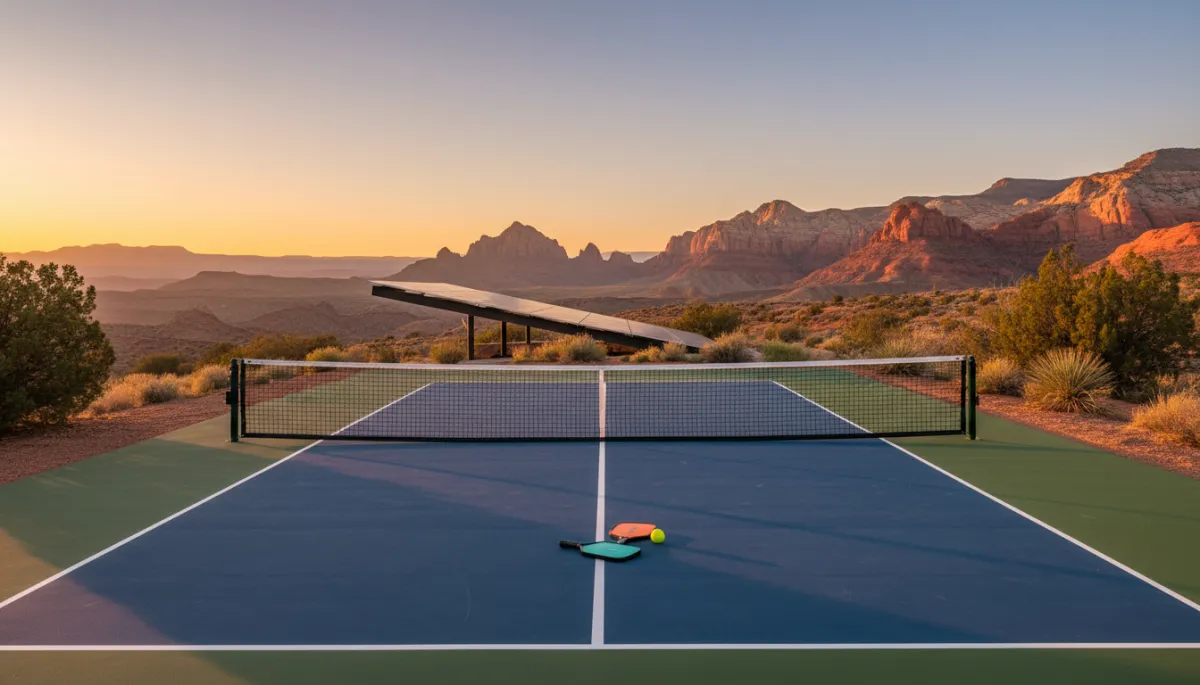
Climate Tips for Utah Outdoor Pickleball Courts
Home Improvement, Outdoor Living, Pickleball
Climate Considerations for Outdoor Pickleball Courts in Utah
Thinking about adding an outdoor pickleball court to your Utah property? Before you fall in love with court colors and net styles, it pays to understand how Utah’s unique climate will affect your court’s comfort, durability, and long-term cost.
Utah’s Climate: What Your Court Has to Survive
Utah’s weather is beautiful for outdoor sports, but it is also demanding on any hardscape. Across the state, you can expect high UV exposure, low humidity, and in many regions, wide temperature swings between day and night. In northern and higher–elevation areas, freeze–thaw cycles and winter snow add another layer of stress, while southern Utah brings intense desert heat and sun.
For an outdoor pickleball court, that means every choice—base, surface, color, fencing, and even accessories—should be made with climate in mind. A court that looks great on day one but fades, cracks, or becomes dangerously slick in a couple of seasons is an expensive disappointment. Planning for Utah’s conditions upfront helps you enjoy more play and fewer repairs.
Heat, Sun, and Surface Comfort
Summer heat is one of the biggest climate considerations for Utah pickleball courts, especially along the Wasatch Front and in southern cities like St. George. Dark surfaces can become extremely hot under full sun, making play uncomfortable and even unsafe for players’ feet and for pets that wander onto the court. UV exposure also accelerates fading and breakdown of cheaper coatings and plastics.
Choose lighter court colors to reflect more sunlight and reduce surface temperature.
Look for UV-stable acrylic coatings or cushioned tile systems rated for high-UV regions and aligned with USA Pickleball construction guidance.
Consider adding shade elements nearby—trees, pergolas, or shade sails—to give players a place to cool down between games.
💡 Pro Tip: Ask your installer for sample surface colors and leave them in the sun for a few days. Touch them in the afternoon to compare how hot they actually get.
Freeze–Thaw Cycles and Cracking Risk
In northern Utah and mountain communities, winter brings repeated freeze–thaw cycles. Moisture seeps into tiny surface and base imperfections, then expands as it freezes, slowly widening cracks. Over time, this can lead to uneven playing areas, trip hazards, and expensive structural repairs if the base was not designed correctly from the start.
For climate-resilient courts, a properly engineered base is just as important as the visible surface. Many Utah homeowners opt for a reinforced concrete slab with control joints and adequate thickness, paired with a compacted, well-draining gravel sub-base. This structure helps manage ground movement and moisture so your surface coating or tile system has a stable foundation to rest on for years.
Drainage, Snow, and Winter Maintenance
Utah’s dry reputation can be misleading—sudden downpours and winter storms still happen, and standing water is the enemy of any outdoor court. Poor drainage encourages surface breakdown, algae growth, and slippery spots when temperatures drop below freezing. In snowy regions, heavy snow loads and ice can stress fencing, nets, and surface materials.
Ensure your court is built with a slight slope to move water off the surface quickly.
Add perimeter drains or French drains if your yard tends to collect water or if you are building near the base of a slope.
Use soft, non-metal shovels or a snow blower with rubber paddles on the lowest setting to clear snow without gouging the surface.
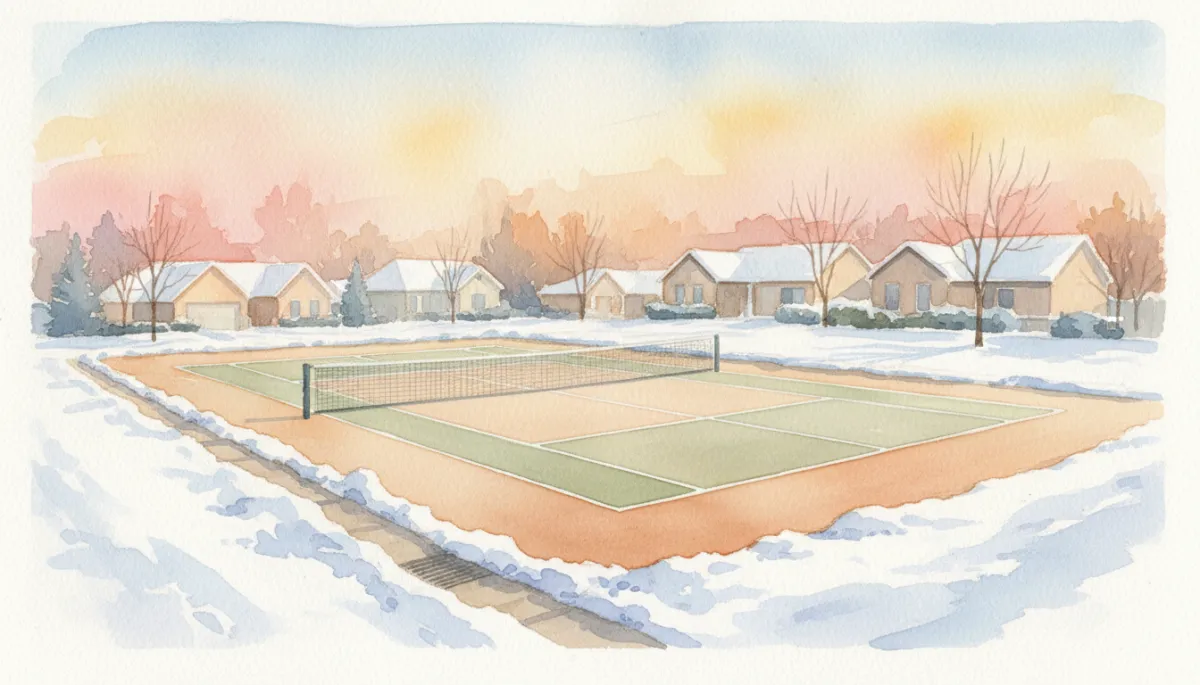
Good drainage and careful snow removal help Utah courts stay safe and level longer.
Wind, Dust, and Everyday Playability
Many Utah neighborhoods experience breezy afternoons, canyon winds, or occasional dust storms. While you cannot control the weather, you can design your court to play better in real-world conditions. Strategic placement and smart fencing choices can make a noticeable difference in how often and how comfortably you use your court.
Position the court where nearby buildings, fences, or trees offer some natural wind protection without blocking all airflow.
Choose wind-screen mesh for fencing to reduce gusts and keep blowing dust off the court surface.
Plan for regular sweeping or blowing to clear dust, leaves, and small debris that can affect ball bounce and traction.
Simple Maintenance Habits for Utah Conditions
Even a well-designed court needs basic care to stand up to Utah’s climate. Fortunately, most of it is simple, low-effort work that pays off in extra seasons of play. Sweep or blow the surface regularly, rinse off dust and de-icing residue in spring, and inspect for small cracks or low spots before they grow into bigger issues. In high-sun areas, plan on re-coating acrylic surfaces every several years to refresh color and protection.
📌 Key Takeaway: Climate-aware design plus light, consistent maintenance is far cheaper than major repairs caused by heat, sun, and freeze–thaw damage.
Building a Court That Matches Utah’s Outdoors
An outdoor pickleball court is a major investment and a daily source of fun, exercise, and connection with friends and family. When you design it around Utah’s climate—intense sun, dry air, temperature swings, and seasonal snow—you protect that investment and create a space you can use more months of the year. If you are talking with installers or contractors, do not hesitate to ask how their recommended materials and designs perform specifically in Utah conditions, not just in generic “outdoor” environments. Partnering with local experts such as Ace Coatings Utah can also help you choose coatings and construction details that are proven to hold up in this region.
By prioritizing UV-resistant surfaces, a stable and well-drained base, smart orientation, and simple maintenance habits, you will end up with a court that feels great underfoot in July, survives January without drama, and stays attractive for years. With the right climate considerations, your Utah pickleball court can be more than a backyard feature—it can become a reliable, year-round part of your lifestyle.