



Professional Pickleball Courts: Specs, Surface Types & Standards
Building Professional Pickleball Courts takes more than painting lines on concrete. A court that plays safely and consistently depends on accurate dimensions, a stable foundation, properly textured surfacing, and installation details that support both recreational and competitive use. For communities, clubs, schools, and private facilities, understanding these standards helps prevent costly mistakes before the first serve is ever hit.
Pickleball’s rapid growth has raised expectations for court quality. Players notice when a surface is too slick, when puddles linger after rain, or when the ball bounces differently from one side of the court to the other. These issues are rarely cosmetic. They usually point to deeper design, drainage, or surfacing problems.
That is why experienced court contractors approach pickleball construction as a complete system. From slab preparation to acrylic coatings and line accuracy, every layer affects safety, performance, and long-term maintenance. Ace Coatings Utah often evaluates these factors together because a court’s durability depends on how well each phase supports the next.
Professional Pickleball Courts Begin With Accurate Dimensions
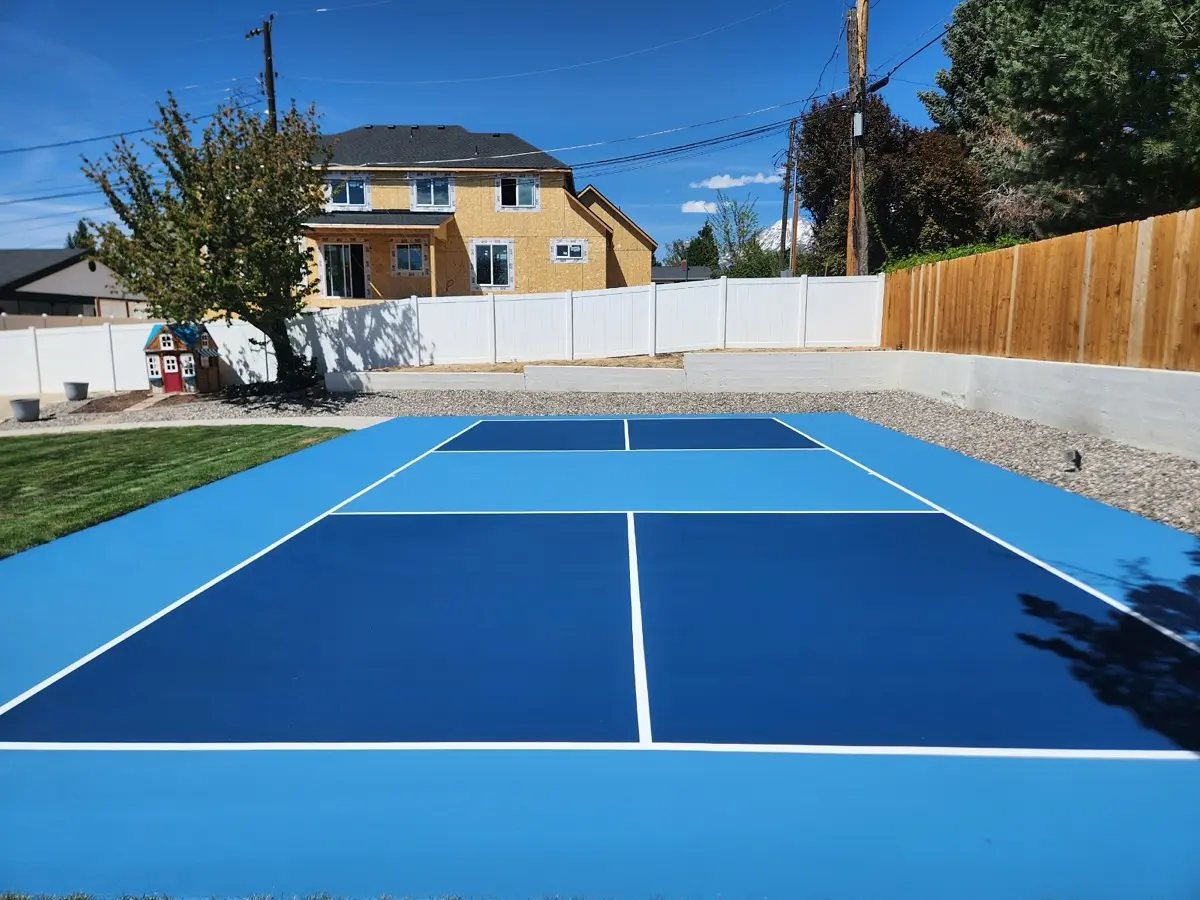
A regulation pickleball court measures 20 feet wide by 44 feet long for both singles and doubles play. The court may look simple, but the measurements must be exact to create fair, predictable gameplay.
The main layout includes:
Baselines: 20 feet across each end
Sidelines: 44 feet along each side
Non-volley zone: 7 feet from the net on both sides
Service courts: Two equal service areas on each side
Line width: Typically 2 inches, included within court measurements
The non-volley zone, commonly called the kitchen, is one of the most important areas on the court. It prevents players from dominating the net with aggressive volleys and creates the strategic touch shots that make pickleball unique.
Planning Safe Space Around Professional Pickleball Courts
The painted playing area is only part of the design. A safe court also needs adequate run-off space around the boundaries. A common recommended total playing area is approximately 30 feet by 60 feet for a single court, though larger envelopes are preferred for higher-level play.
This extra space matters because players move quickly backward, sideways, and diagonally. Without enough clearance, they may collide with fencing, benches, posts, or adjacent courts. For multi-court facilities, spacing between courts is just as important as the court dimensions themselves.
When planning a new build, facility owners should also consider:
Player circulation between courts
Gate placement and access paths
Seating and shade areas
Drainage direction
Lighting pole locations
Future resurfacing access
Good layout planning reduces safety risks and makes the court easier to maintain over time.
Surface Choices for Professional Pickleball Courts That Last
The court surface determines how the game feels underfoot. It influences traction, ball bounce, drainage, heat retention, and joint comfort. While the color coat is the most visible part of the court, the performance comes from the full surface system beneath it.
Most dedicated pickleball courts are built on either asphalt or concrete. Asphalt may have a lower initial cost, but it can soften in heat, shift over time, and require more frequent repair. Concrete is often preferred for long-term stability, especially when properly reinforced, cured, and sloped.
For premium installations, post-tensioned concrete is sometimes used to reduce cracking risk. This type of slab uses tensioned steel cables to help hold the concrete together, creating a stronger and more stable base. It is especially valuable in regions with freeze-thaw cycles, expansive soils, or heavy seasonal temperature swings.
Ace Coatings Utah considers drainage one of the most important parts of court performance. Even a strong slab can fail prematurely if water sits on the surface or seeps into cracks. Courts should be built with a subtle slope that moves water off the playing area without making the court feel uneven.
Acrylic Systems for Professional Pickleball Courts
A professional acrylic surfacing system is not the same as ordinary paint. Standard paint can become slippery, peel under foot traffic, and fail quickly under UV exposure. Athletic acrylic coatings are designed to bond to the pavement and create a textured, durable playing surface.
A typical system may include:
Surface preparation: Cleaning, grinding, patching, and crack repair
Acrylic resurfacer: Fills small voids and creates a consistent base
Optional cushion layers: Rubberized layers that reduce impact
Color coats: Pigmented acrylic layers mixed with texture
Line striping: Accurate, high-contrast court markings
Texture is especially important. Fine silica sand is often blended into acrylic coatings to create traction. Too little texture can make the court slick. Too much texture can slow play, wear shoes faster, and create a harsh surface during falls.
Cushioned acrylic systems are also worth considering for clubs, senior communities, schools, and facilities with frequent daily play. These systems can help reduce stress on knees, ankles, and hips while still maintaining a reliable ball bounce. They cost more upfront, but they may improve player comfort and extend court usability.
Maintenance Standards for Professional Pickleball Courts
A well-built court still needs routine care. Dirt, leaves, standing water, sunscreen residue, and organic growth can reduce traction and shorten the life of the coating system. Regular maintenance protects the investment and keeps the court safer for players.
Basic maintenance should include:
Removing debris with soft brooms or blowers
Washing the surface periodically with mild cleaning solutions
Keeping drainage paths clear
Inspecting cracks before they widen
Checking low spots where water collects
Avoiding harsh chemicals or pressure washing too aggressively
Small issues should be addressed early. Hairline cracks, fading texture, and minor depressions are easier to correct before they spread. If water remains in shallow areas after rain, those spots may need professional leveling or patching.
Equipment and Layout Details for Professional Pickleball Courts
The net system is another detail that affects play quality. A regulation pickleball net is 36 inches high at the sidelines and 34 inches high at the center. Permanent net posts are usually preferred for dedicated courts because they provide better tension and stability than portable systems.
For facilities that need flexibility, removable post systems can be installed using ground sleeves. These allow posts to be taken out for resurfacing, maintenance, or multi-use programming while keeping the court clean and functional.
Lighting and fencing also shape the player experience. Quality lighting reduces shadows and improves ball visibility during evening play. Fencing helps contain balls and improves safety, especially when courts are located near parking lots, walkways, or neighboring properties.
For competitive facilities, the standards published by USA Pickleball are the best reference point for official rules and court requirements. Local code requirements, accessibility standards, and site conditions should also be reviewed before construction begins.
Ace Coatings Utah works with these practical details in mind because successful courts are not judged only on appearance. They are judged by how safely, consistently, and comfortably they play after months and years of use.
A professional pickleball court is a long-term asset. The best results come from pairing accurate layout with proper base construction, tested acrylic materials, smart drainage, and consistent maintenance. When those elements work together, players get better traction, truer bounce, cleaner lines, and a more enjoyable game.
Contact Ace Coatings Utah to discuss your court plans, ask questions about surface options, or schedule a site review. Their team can help you understand what your space needs and recommend practical next steps based on your goals, budget, and playing conditions.