



Pickleball Court Dimensions: Your Ultimate Guide
Home Improvement, Pickleball Court Dimensions
Pickleball Court Dimensions: A Practical Guide for Your Backyard or Community Court
If you’re planning to build a pickleball court at home or in your community, understanding standard pickleball court dimensions is the first step to getting it right. Proper sizing affects safety, playability, and how “official” your court feels compared to the guidelines from organizations like USA Pickleball. In this guide, you’ll learn the exact measurements you need, how much total space to allow, and why high-quality surfacing from partners like Ace Coatings Utah makes such a difference to the final result.
Official Pickleball Court Dimensions: The Basics
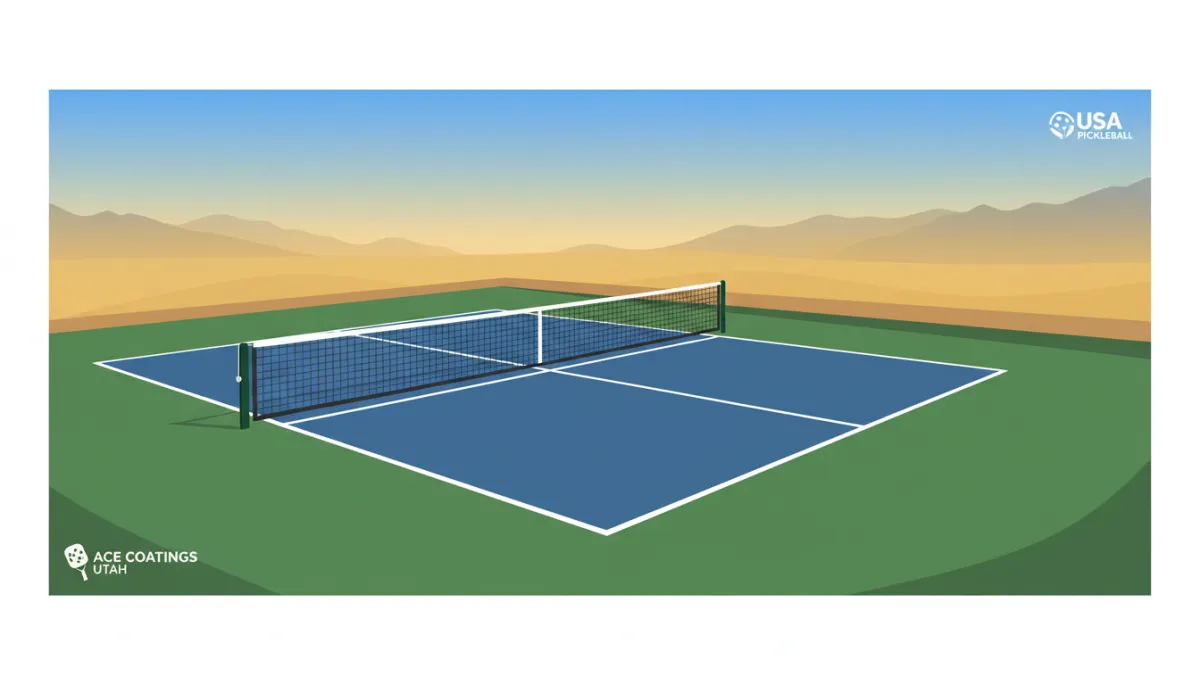
A standard pickleball court is the same size for both singles and doubles play. The official playing area—inside the boundary lines—measures 20 feet wide by 44 feet long. This 20' x 44' rectangle is the foundation of every regulation court and should be your starting point when planning a new build or converting an existing surface like a tennis or basketball court.
Within that 20' x 44' space, the court is divided into several clearly defined zones:
Baselines: The lines at the far ends of the court, 20 feet long, where players typically serve from.
Sidelines: The lines running the 44-foot length of the court on each side.
Non-volley zone (kitchen): A 7-foot-deep area on both sides of the net where players cannot volley the ball. This creates a 14-foot-wide strip centered on the net.
Service boxes: Each side of the court has two 10-foot-deep service areas, left and right, divided by the centerline and bounded by the non-volley zone line and baseline.
The net itself runs the full 20-foot width of the court and is positioned in the center, splitting the 44-foot length into two equal 22-foot sides. Standard net height is 36 inches at the sidelines and 34 inches at the center, creating a slight dip that players will immediately recognize from properly built courts.
Total Space Needed: Playing Area vs. Recommended Clearances
While 20' x 44' defines the official playing surface, most homeowners and communities quickly realize that you need more space around the lines so players can move safely and comfortably. This surrounding area is known as the “runoff” or “clearance” zone and is essential for a court that feels spacious rather than cramped.
For a recreational backyard court, a common recommendation is to allow at least:
Minimum total area: About 30 feet wide by 60 feet long.
This gives you roughly 5 feet of space beyond each sideline and 8 feet behind each baseline.
For more serious play or community facilities that expect tournaments, many designers aim for a larger footprint, closer to 34 feet wide by 64 feet long, which feels more like a professional environment and aligns well with construction guidance from organizations such as USA Pickleball. The extra space reduces the risk of players stepping off the slab, tripping over nearby landscaping, or colliding with fences and walls.
Line Markings and Court Layout Details
Once you’ve established the overall pickleball court dimensions, the next step is marking lines accurately. Clean, highly visible lines make it easier to call balls in or out and give your court a polished, professional look.
Line width: Most courts use lines that are 2 inches wide. These lines are considered part of the playing area, so measurements are taken to the outer edge of the line.
Kitchen line: The non-volley zone line is placed exactly 7 feet from the net on each side and runs the full 20-foot width of the court.
Centerline: Extends from the kitchen line to the baseline, dividing the service area into left and right service boxes, each 10 feet deep and 10 feet wide.
Accurate linework is especially important if you plan to host local leagues or want a court that feels familiar to players who also use municipal or club facilities. Professional installers use high-quality coatings and stencils to ensure straight, consistent lines that won’t peel or fade quickly under Utah’s sun, snow, and temperature swings.
Surface Materials and Why They Matter for Playability
Getting the dimensions right is only half the equation. The surface you choose for your pickleball court significantly affects how the ball bounces, how your joints feel, and how long your court will last. Many backyard courts start with a concrete or asphalt slab because these materials are durable and relatively cost-effective. However, a raw slab is rarely the final step if you want a true “court” experience rather than just a painted driveway.
A properly coated court surface should offer:
Consistent ball bounce: Smooth, even coatings reduce dead spots and unpredictable bounces that frustrate players.
Slip resistance: A balanced texture helps players move confidently without feeling like the surface is either too slick or too abrasive.
UV and weather protection: Quality coatings shield the underlying slab from Utah’s freeze-thaw cycles, helping prevent cracking and premature wear.
This is where experienced local specialists like Ace Coatings Utah make a real difference. They understand how altitude, temperature swings, and local soil conditions affect outdoor surfaces, and they can recommend coating systems that hold up year after year while still looking clean and professional.
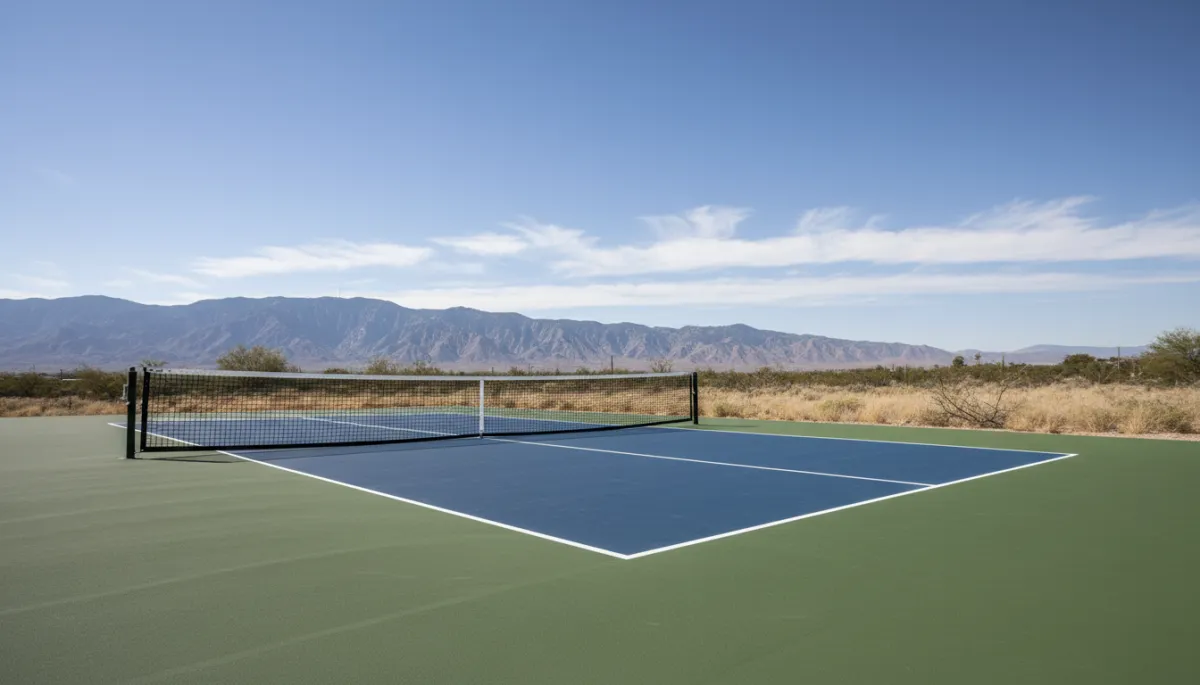
A well-prepared surface and accurate lines turn a simple slab into a true pickleball court.
Indoor vs. Outdoor Courts: Does the Size Change?
Whether your court is indoors or outdoors, the official pickleball court dimensions remain the same: 20' x 44' for the playing area. The main differences come from ceiling height, lighting, and environmental factors rather than measurements on the ground. For indoor courts, you’ll want enough vertical clearance so lobs don’t hit overhead structures and bright, even lighting that doesn’t create harsh glare on the surface.
Outdoor courts, especially in Utah, must account for drainage, sun exposure, and wind. Slight slopes may be needed to shed water, and color choices can influence surface temperature on hot summer days. Neutral and mid-tone colors often strike a good balance between visibility, aesthetics, and heat absorption, which is why many homeowners favor them for backyard courts that need to look great year-round.
Converting Existing Surfaces to Pickleball Courts
Many Utah homeowners and HOAs decide to convert underused tennis or basketball courts into multi-use spaces that include pickleball. Because the pickleball court dimensions are smaller than a tennis court, you can often fit one or more pickleball layouts within the existing footprint without pouring a new slab. This approach can be cost-effective and space-efficient if done thoughtfully.
A single tennis court can often accommodate two to four pickleball courts, depending on orientation and available runoff space.
Basketball courts can sometimes host one pickleball court centered within the playing area, making use of existing fencing and lighting.
When converting, it’s essential to assess the condition of the current surface. Cracks, low spots, and peeling coatings should be addressed before new lines are added. Professional resurfacing ensures that the new pickleball layout feels intentional and long-lasting, rather than like a temporary overlay that will need constant touch-ups.
Local Considerations for Utah Pickleball Courts
Building a court in Utah comes with a few unique considerations. Elevation and climate can affect everything from how quickly coatings cure to how often you’ll need maintenance. Freeze-thaw cycles can put stress on concrete slabs, and intense summer sun can fade low-quality paints and coatings far faster than you might expect. All of this reinforces why it’s so important to balance correct dimensions with smart material choices and expert installation.
Partnering with a local team that understands these conditions means your 20' x 44' playing area will stay true to spec over time. Proper drainage planning, crack repair, and high-performance coatings are all part of creating a court that looks great on day one and still plays beautifully years later.
Bringing It All Together: From Measurements to a Finished Court
When you step back, a successful pickleball project is about more than just knowing that the court is 20 feet by 44 feet. It’s about planning the total footprint, choosing the right surface, and making sure every line, net post, and coating layer works together to create a safe, enjoyable place to play. Whether you’re adding a single backyard court or upgrading a shared community space, the right preparation now prevents costly corrections later.
If you’re ready to turn your measurements into a real court, Ace Coatings Utah can help with everything from evaluating your existing slab to applying professional-grade coatings and linework tailored to Utah’s conditions. Their experience ensures that your pickleball court dimensions are accurate, your surface performs well, and your investment holds up season after season.
To explore options for your home, HOA, or community space, you can get free estimate and start planning a court that your family, friends, and neighbors will enjoy for years to come.