


Modular Tiles vs. Acrylic Coating in Pickleball Surface
When evaluating Modular Tiles vs. Acrylic Coating in Pickleball Surface, the difference goes far beyond appearance. Court surface impacts ball response, joint comfort, maintenance costs, and long-term durability. Whether you're planning a residential backyard court or upgrading a community facility, understanding these distinctions helps you make a confident, informed investment.
At Ace Coatings Utah, we’ve worked with homeowners, HOAs, schools, and commercial facilities across the region. Through hands-on installation and resurfacing experience, we’ve seen how surface choice affects performance, maintenance cycles, and overall satisfaction. This guide breaks down the real-world pros and considerations of each system so you can choose wisely.
Modular Tiles vs. Acrylic Coating in Pickleball Surface: Performance and Ball Response
Ball bounce is often the first thing players notice.
Acrylic Coating (Hard Court Surface)
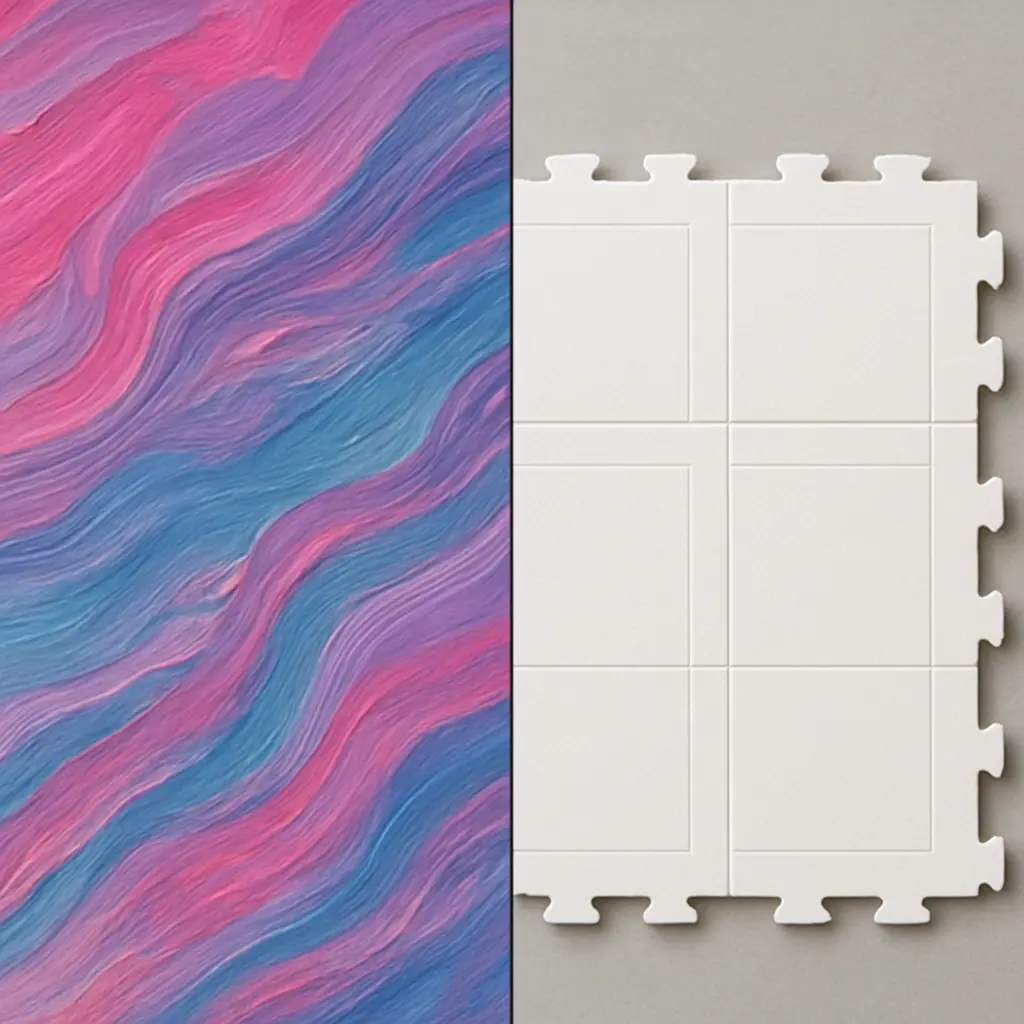
An acrylic system is a multi-layer coating applied over asphalt or concrete. It creates a seamless, rigid surface. Because very little energy is absorbed, the ball bounce is:
Fast
Low
Highly predictable
This is the traditional hard-court feel most players associate with competitive facilities. It favors aggressive, quick-reaction play and power-driven shots.
Modular Tiles
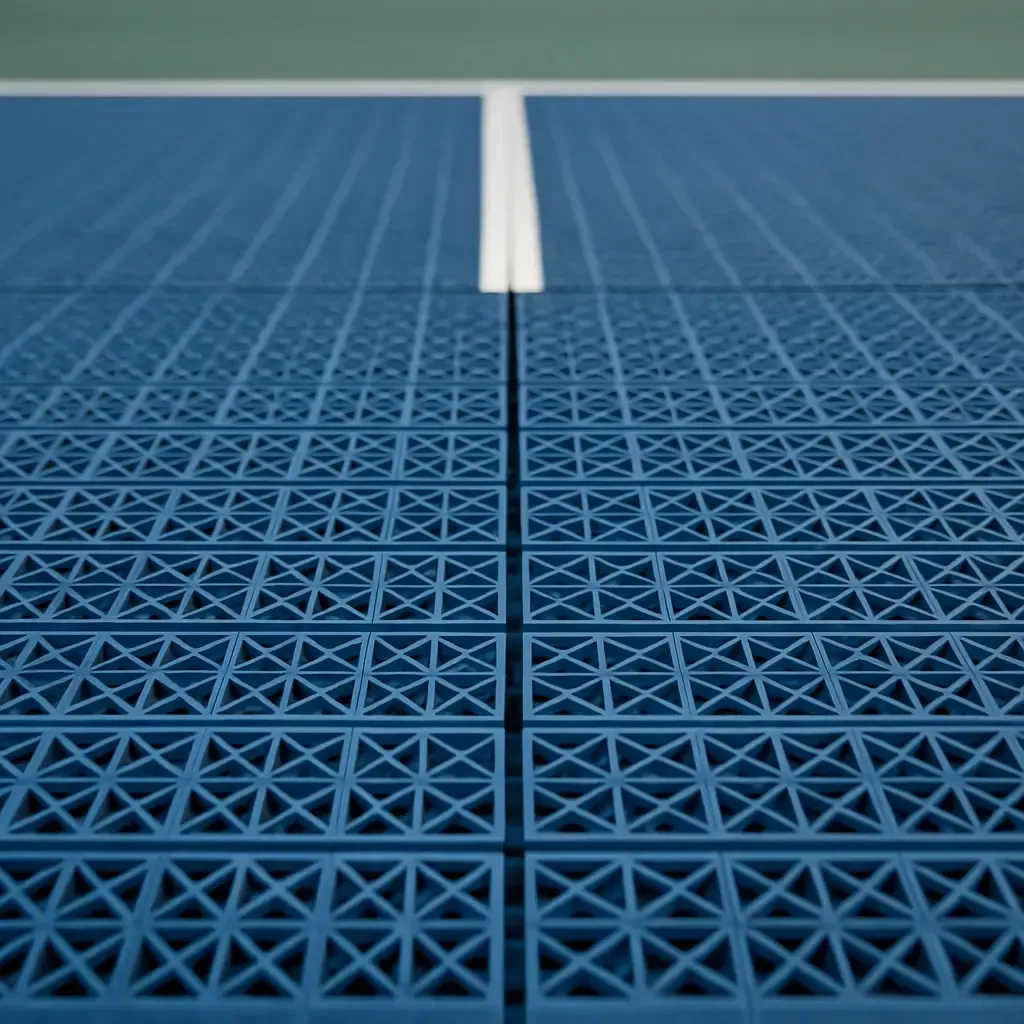
Modular systems consist of interlocking polypropylene tiles installed over a flat base. These tiles have slight engineered flex, meaning:
Slightly higher bounce
Marginally slower pace
More rally-friendly response
Some players appreciate the extra fraction of a second it provides for positioning and shot preparation.
If you’re designing a court that aims to align with competitive standards, referencing guidelines from USA Pickleball can help ensure dimensions and performance expectations are met.
Modular Tiles vs. Acrylic Coating in Pickleball Surface: Comfort, Safety, and Joint Impact
Surface rigidity directly affects player comfort.
Acrylic Courts
Because they are essentially coated concrete or asphalt, they offer minimal shock absorption. Over long matches, players may experience increased stress on knees, hips, and lower back. This doesn’t make them unsafe—but they are firm.
Modular Tile Courts
The built-in flex in tile systems provides mild shock absorption. Many recreational players and older athletes report reduced fatigue during extended sessions.
From an installation perspective, Ace Coatings Utah often discusses player demographics before recommending a surface. A competitive club with tournament aspirations may lean toward acrylic. A residential family court may prefer tile comfort.
Traction and Slip Resistance
Both surfaces are designed for safety:
Acrylic coatings include sand or textured additives for grip.
Modular tiles feature traction patterns molded into the surface.
Drainage is another differentiator. Acrylic courts must dry after rain, often requiring squeegees. Modular tiles allow water to drain between panels, minimizing downtime.
Modular Tiles vs. Acrylic Coating in Pickleball Surface: Cost, Maintenance, and Longevity
Modular Tiles vs. Acrylic Coating in Pickleball Surface: Installation Costs Compared
Cost isn’t just about materials—it’s about labor, long-term care, and repair strategy.
Acrylic Coating Costs
Lower material cost
Requires professional installation
Surface prep is critical (crack repair, leveling, cleaning)
Labor makes up a significant portion of total expense
Professional application ensures durability and consistent texture. At Ace Coatings Utah, proper base preparation is a major focus because even the best coating will fail over unstable concrete.
Modular Tile Costs
Higher material cost upfront
Can be DIY-installed
Reduced labor expense for homeowners
For some property owners, eliminating installation labor makes tile systems financially appealing.
Maintenance and Repairs
This is where the systems truly diverge.
Acrylic Maintenance
Periodic cleaning
Crack repair if base shifts
Full resurfacing typically required every 4–8 years depending on climate and usage
Cracks require grinding, patching, and blending—often leaving minor visible differences.
Modular Tile Maintenance
Simple cleaning
Individual tile replacement if damaged
No resurfacing cycles
If a tile cracks or stains, it can be removed and replaced in minutes without professional intervention.
Climate Considerations
In freeze-thaw climates, surface behavior matters.
Acrylic surfaces may develop cracks if water penetrates and freezes.
Modular systems allow drainage and natural expansion, reducing stress from temperature swings.
Because Utah experiences wide seasonal variation, Ace Coatings Utah carefully evaluates climate exposure before recommending solutions.
Making the Right Choice for Your Court
There is no universal “best” option—only the best option for your needs.
Choose Acrylic Coating if:
You want traditional, tournament-style performance
You prefer a seamless appearance
You value professional-grade finish and long-term resurfacing cycles
Choose Modular Tiles if:
You want easier repairs
You prioritize joint comfort
You prefer faster post-rain play
You’re considering DIY installation
The right decision balances performance goals, climate, maintenance expectations, and budget.
Work with Experienced Professionals
Surface selection is only part of the equation. Proper base preparation, grading, crack mitigation, and drainage planning determine long-term success.
At Ace Coatings Utah, we specialize in high-performance acrylic court systems designed for durability and consistent play. Our team evaluates your site conditions, usage goals, and long-term expectations before recommending a tailored solution. From new court construction to resurfacing and repair, we focus on craftsmanship, longevity, and playability.
If you’re planning a new pickleball court or upgrading an existing one, we’re here to help.
Contact us at Ace Coatings Utah today to schedule a consultation and get expert guidance on your pickleball surface project.