



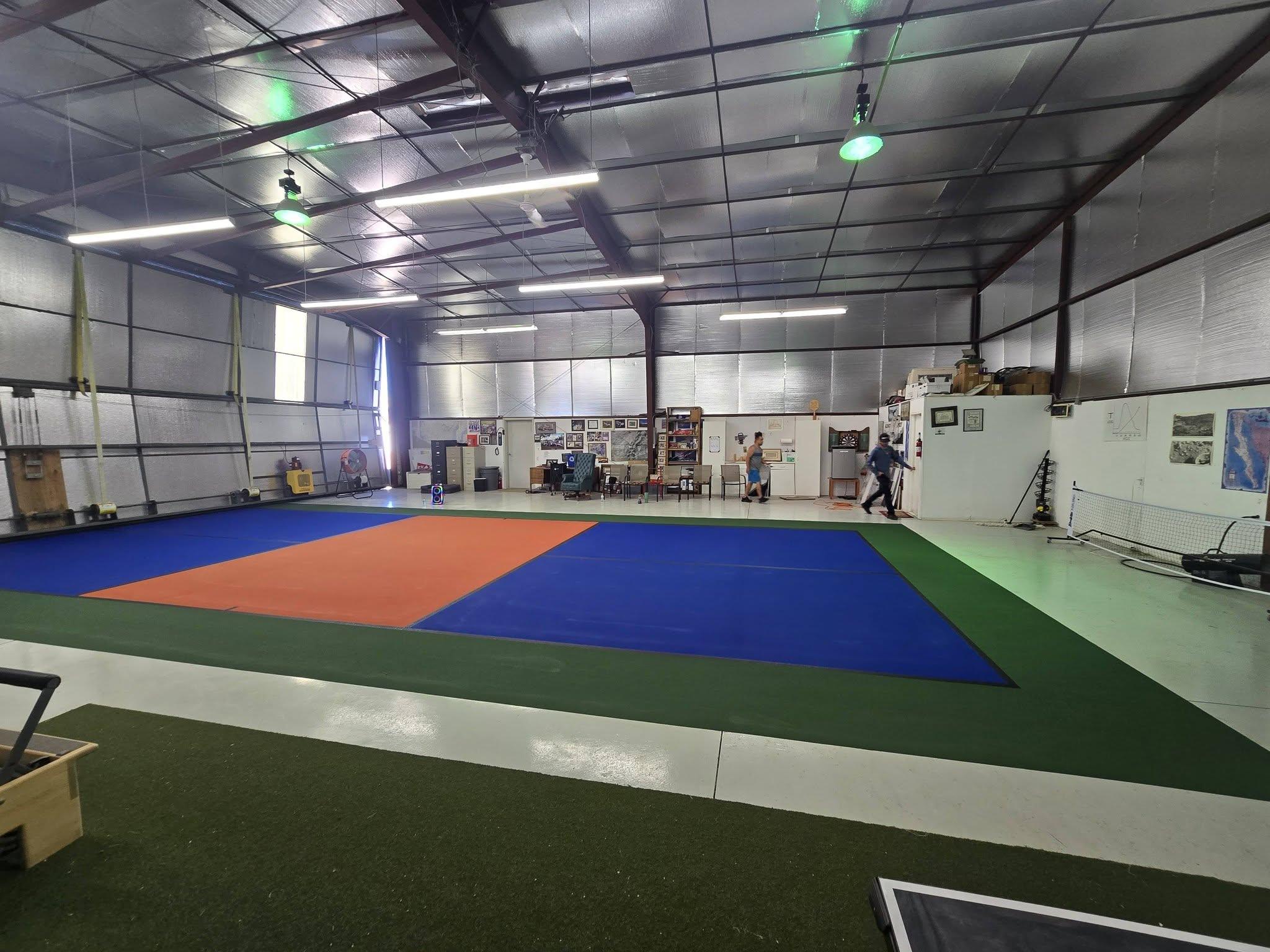
Building an Indoor Pickleball Court in Utah: What to Know Before You Start
Pickleball has moved far beyond a casual backyard game. Across Utah, demand for reliable, year-round play is growing quickly as players, clubs, schools, HOAs, and private facility owners look for ways to avoid weather delays. That is why Indoor pickleball court construction in Utah has become a smart investment for anyone who wants consistent play through hot summers, snowy winters, spring storms, and windy afternoons.
An indoor court is more than a roof over a playing surface. It requires the right dimensions, flooring system, lighting, acoustics, ventilation, and construction planning. A well-built facility should protect player safety, support accurate ball response, reduce maintenance concerns, and create a comfortable environment for recreational and competitive play.
For property owners evaluating a private court or commercial sports space, working with experienced professionals such as Ace Coatings Utah can help make the planning process clearer from the beginning. The goal is not simply to build a court. The goal is to create a durable, playable, and code-compliant space that performs well for years.
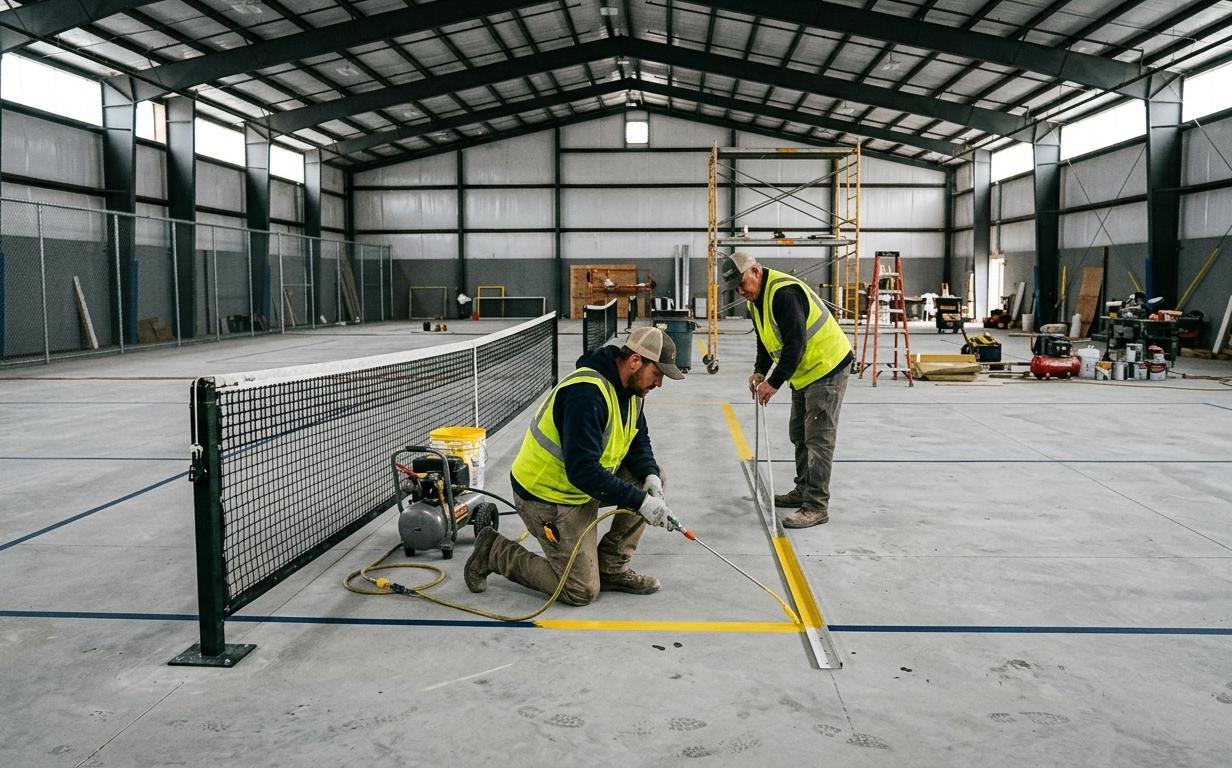
Planning Indoor pickleball court construction in Utah from the ground up
Every successful indoor pickleball project begins with space planning. The official playing area is 20 feet wide by 44 feet long, but that measurement only covers the court lines. Players need room to serve, move laterally, chase wide shots, and recover safely without running into walls, fencing, benches, or nearby courts.
For a single indoor court, a practical minimum footprint is usually about 30 feet by 60 feet. For a more comfortable playing experience, especially for competitive or tournament-style play, 34 feet by 64 feet is often preferred. Multi-court facilities need additional planning for walkways, divider netting, spectator areas, storage, restrooms, and traffic flow.
Ceiling height is just as important. Pickleball includes lobs, overheads, resets, and defensive shots that can rise high above the net. A low ceiling can interfere with normal play and frustrate players. Many indoor facilities aim for at least 18 to 20 feet of clear ceiling height over the playing area, with more clearance preferred when the space is intended for advanced players or organized events.
Space requirements for Indoor pickleball court construction in Utah
Before choosing a building type or floor system, confirm how the court will actually be used. A private home court, a church recreation space, a school gym conversion, and a dedicated commercial pickleball facility all have different needs.
Key planning questions include:
Will the court be used for casual play, lessons, leagues, or tournaments?
Is the project a new build or a retrofit of an existing structure?
How many players and spectators will use the space at one time?
Will the court need ADA-accessible routes, restrooms, or viewing areas?
Is the building designed to handle Utah snow loads and local code requirements?
For commercial spaces, layout matters beyond the court surface. Players should be able to move between courts without walking through active play zones. Divider nets can reduce interruptions from stray balls. Seating areas should be placed where spectators can watch without creating safety risks. Storage for paddles, portable nets, cleaning equipment, and maintenance supplies should also be planned early.
Materials and systems for Indoor pickleball court construction in Utah
The right surface system can dramatically affect how the court plays. Pickleball demands traction, consistent ball bounce, and enough shock absorption to reduce stress on knees, ankles, hips, and lower backs. That is why flooring should never be treated as an afterthought.
Cushioned acrylic systems are a popular choice for dedicated pickleball facilities because they combine a reliable playing surface with added comfort. These systems typically include multiple layers designed to improve resilience, traction, and durability. Compared with a hard concrete slab or slick gym floor, a properly installed cushioned acrylic court can offer better grip and a more controlled pace of play.
Wood flooring may be appropriate in some gym-style environments, but it can play faster, require more maintenance, and may not deliver the same pickleball-specific traction. Tile systems can work in certain recreational settings, but they must be evaluated carefully for ball response, joint comfort, and long-term durability.
Lighting is another major performance factor. Poor lighting can make it difficult to track the ball, especially on lobs and fast exchanges near the kitchen line. The best indoor court lighting is bright, even, and glare-controlled. LED fixtures are often used because they are energy-efficient and provide consistent illumination, but fixture placement matters. Lights should reduce shadows and avoid blinding players when they look upward.
Acoustics also deserve serious attention. Pickleball can be loud indoors because the ball-and-paddle impact creates a sharp, repeating sound. In metal buildings or rooms with hard surfaces, that sound can echo and become uncomfortable. Acoustic wall panels, ceiling baffles, insulation, and strategic divider curtains can help reduce reverberation and improve the player experience.
Surface choices for Indoor pickleball court construction in Utah
A high-quality indoor pickleball surface should balance grip, durability, and player comfort. Too little traction can increase slipping risks. Too much texture can create abrasive falls and premature shoe wear. The surface also needs to support consistent bounce across the entire court.
When comparing surface options, consider:
Shock absorption for long playing sessions
Slip resistance during lateral movement
Ball bounce consistency
Maintenance requirements
Compatibility with line striping
Long-term repair and resurfacing needs
A professional installer should also evaluate the substrate. Even the best coating system can fail if the base has moisture problems, cracks, unevenness, or poor preparation. Concrete slabs may need grinding, patching, moisture testing, or leveling before surfacing begins. This is one area where expert evaluation from Ace Coatings Utah can help prevent costly surface problems later.
Budgeting and building Indoor pickleball court construction in Utah wisely
Budgeting for an indoor court depends on the project scope. Retrofitting an existing building is usually different from constructing a new clear-span structure. Costs can vary based on site preparation, permits, engineering, HVAC, insulation, lighting, surfacing, net systems, and amenities.
For a dedicated indoor court, the court surface, striping, net system, and related installation may represent only one part of the total investment. The building itself can be the largest expense, especially when it must meet snow-load, seismic, electrical, fire, accessibility, and mechanical requirements.
Utah’s climate makes environmental control especially important. Indoor facilities must stay comfortable during summer heat and winter cold. A good HVAC system should provide reliable heating, cooling, and air circulation. Ventilation helps manage indoor air quality, while humidity control helps prevent condensation that could make the court slippery.
Permitting should also be handled carefully. Residential projects may involve zoning rules, setbacks, structure height limits, HOA requirements, drainage considerations, and neighborhood noise concerns. Commercial projects may require additional review for parking, occupancy, ADA access, fire suppression, emergency exits, and public safety requirements.
USA Pickleball provides recognized court guidelines, but local code and site conditions still determine how a specific project should be designed and approved.
Contractor selection for Indoor pickleball court construction in Utah
Choosing the right team is one of the most important decisions in the entire project. Indoor pickleball courts involve sports-surface knowledge, construction coordination, building code awareness, and attention to detail. A general contractor may understand buildings, but not every builder understands how court dimensions, coatings, lighting, acoustics, and player movement work together.
When evaluating contractors, ask practical questions:
Have they completed pickleball or athletic court projects before?
Can they explain the pros and cons of different surface systems?
Do they understand indoor lighting and acoustic considerations?
Can they identify potential slab or moisture issues before installation?
Do they provide realistic maintenance guidance after the court is built?
A strong contractor should be able to discuss both performance and longevity. They should also explain the installation sequence clearly, from substrate preparation to surfacing, line layout, curing time, and final inspection.
Indoor pickleball courts are long-term assets. Cutting corners on the surface, lighting, or climate system can lead to higher maintenance costs and a weaker playing experience. Investing in the right materials and planning upfront helps protect the value of the facility.
A well-designed indoor court gives players consistency. No wind. No snow delays. No harsh sun. No early sunset cutting matches short. For homeowners, it can create a private recreation space that supports family, fitness, and social play. For commercial operators, it can become a high-demand facility that serves leagues, lessons, rentals, tournaments, and community events.
As pickleball continues to grow across Utah, indoor facilities will play a larger role in meeting player demand. With careful planning, quality surfacing, proper environmental controls, and experienced construction support, an indoor court can deliver safe, reliable play throughout the year.
Ace Coatings Utah can help property owners think through the details that matter most, from surface performance to long-term maintenance planning. Whether the project is a single private court or a multi-court facility, the best results come from combining strong construction fundamentals with pickleball-specific expertise.