


How much does it cost to build a basketball court in Utah?
How much does it cost to build a basketball court is one of the first questions homeowners ask when they start imagining a dedicated place for shooting practice, family games, or neighborhood 3-on-3. The honest answer is that the final price depends on more than the hoop, the court size, or the surface color. A quality basketball court is a small construction project, and the best budgets account for the ground beneath the court, the foundation, drainage, surfacing, accessories, and long-term maintenance.
Nationally, many residential basketball court projects fall somewhere between $11,000 and $76,000, with mid-range builds often landing around the $30,000 to $40,000 mark. A compact backyard half-court with a simple hoop and basic surface will sit closer to the lower end, while a full court with lighting, fencing, premium surfacing, and professional-grade equipment can climb quickly.
In Utah, the budget deserves extra attention because soil conditions, grade changes, freeze-thaw cycles, and drainage can all influence the build. A flat, accessible yard is very different from a sloped property with rocky soil or limited equipment access. That is why experienced sports surfacing professionals look beyond square footage and evaluate the full site before estimating the project.
For homeowners working with Ace Coatings Utah, the goal is not simply to install a playable surface. The goal is to create a court that performs well, sheds water correctly, resists premature cracking, and gives players a safe, consistent experience for years.
How much does it cost to build a basketball court when site preparation is included?
Site preparation is often the most underestimated part of a basketball court budget. Many homeowners start by pricing concrete, asphalt, hoops, and paint, but the real work begins with the land itself. If the base is not stable, level, and properly drained, even the best surface system can fail early.
A basketball court needs a solid, compacted sub-base. This typically includes excavation, grading, and a layer of compacted aggregate beneath the slab or asphalt. That sub-base acts like the foundation of the court. It helps distribute weight, reduce movement, and protect the playing surface from sinking, cracking, or heaving.
Utah properties can vary widely. Some yards are flat and simple to access. Others require more extensive grading, retaining considerations, or rock removal. The more work required to create a stable platform, the more the project will cost.
Typical site-preparation expenses may include:
Clearing grass, roots, trees, or old hardscape
Excavating and leveling the court footprint
Importing and compacting road base or crushed stone
Creating proper slope for water runoff
Installing drainage systems where needed
Hauling away excess soil or debris
Drainage is especially important. A court that holds water will age faster, become unsafe after storms, and may develop surface failures over time. Even a slight slope in the wrong direction can cause puddling, edge erosion, or moisture issues beneath the slab.
How much does it cost to build a basketball court with proper drainage?
Drainage costs depend on the slope of the yard and where water naturally wants to travel. A simple court may only need careful grading so water moves off the surface. More complex sites may require French drains, channel drains, swales, or edge drainage to move water away from the court and surrounding landscaping.
A basic grading adjustment may add a modest amount to the budget, while more involved drainage work can add several thousand dollars. Although this can feel like a hidden cost, it is usually cheaper than repairing a court that was built without a proper water-management plan.
A practical rule: if water sits in the yard after a storm, assume drainage should be discussed before choosing the final surface system.
How much does it cost to build a basketball court based on foundation and surface?
Once the site is prepared, the foundation becomes one of the biggest cost drivers. Most outdoor basketball courts use either concrete or asphalt as the structural base. Both can work, but they behave differently over time.
Concrete usually costs more upfront, but it offers strong long-term performance when installed correctly. For many residential courts, a reinforced concrete slab is preferred because it provides a stable, durable surface for sports coatings or modular tile systems. In climates with seasonal temperature swings, reinforcement and proper control joints matter.
Asphalt can be more affordable at installation and is common for larger recreational areas. However, it may require more maintenance over time and can soften in heat or shift with freeze-thaw movement if the base is not properly prepared. The right choice depends on budget, expected use, site conditions, and long-term maintenance expectations.
The playing surface also affects the total cost. Bare concrete is not ideal for regular play because it is hard on joints, can be slippery when dusty or wet, and does not provide the traction or consistent ball response most homeowners want. A finished sport surface improves safety, appearance, and playability.
Common surface options include:
Acrylic sport coatings for traction, color, and consistent play
Cushion coating systems for added comfort and reduced impact
Modular sport tiles for drainage and shock absorption
Premium multi-layer systems for higher-performance courts
Acrylic surfacing is a popular choice because it offers a clean court appearance, reliable traction, and customizable colors and game lines. Cushion systems cost more but can be worthwhile for families who expect frequent play or want a more forgiving surface.
How much does it cost to build a basketball court with acrylic surfacing?
Acrylic surfacing is typically priced by square footage and by the number of coating layers required. A basic color coating system will cost less than a cushioned acrylic system, but both require a sound base beneath them.
The quality of the surface installation matters. Proper cleaning, crack preparation, leveling, coating thickness, and line layout all affect the finished result. A sports court is not the same as a painted driveway. The surface must balance grip, ball bounce, drainage, durability, and visual clarity.
This is where a sports-focused contractor brings value. A team like Ace Coatings Utah can evaluate whether the existing or new base is suitable for coating, recommend the right surface system, and help homeowners avoid shortcuts that lead to peeling, puddling, or inconsistent play.
For court markings, homeowners can choose a simple basketball layout or add multi-sport lines. Some families combine basketball with pickleball or other recreational games. Although USA Pickleball standards are commonly referenced for pickleball layouts, basketball court design should still prioritize safe run-off space, hoop placement, and player movement.
How much does it cost to build a basketball court after size, accessories, and labor?
Court size is the most visible budget factor. Larger courts require more excavation, more base material, more concrete or asphalt, more surfacing, and more labor. Even a modest increase in dimensions can noticeably affect the final price.
Common residential layouts include:
Small shooting court: ideal for free throws and casual practice
Compact half-court: good for tight yards and family use
Standard half-court: better for 2-on-2 or 3-on-3 play
Full court: best for serious play but requires significant space and budget
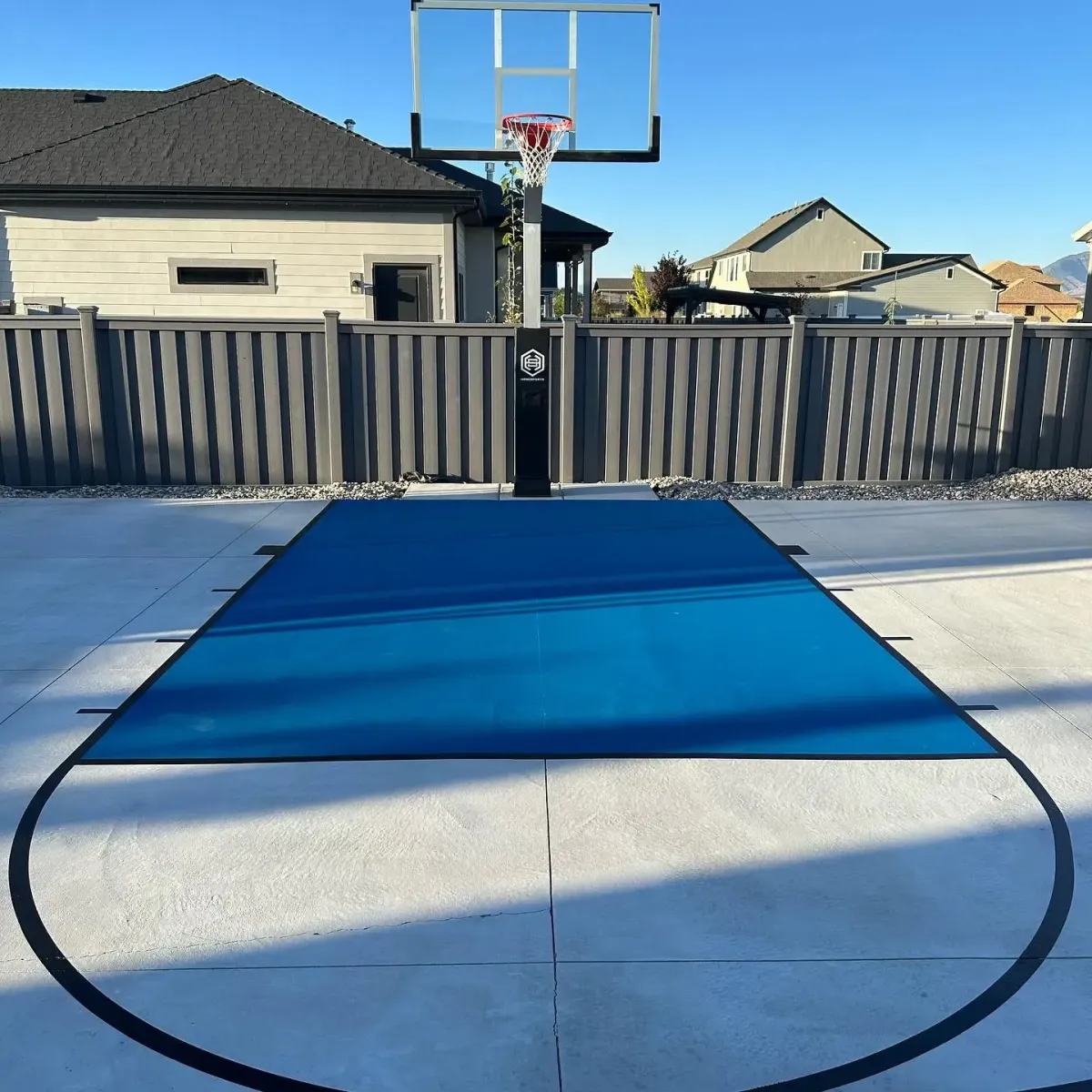
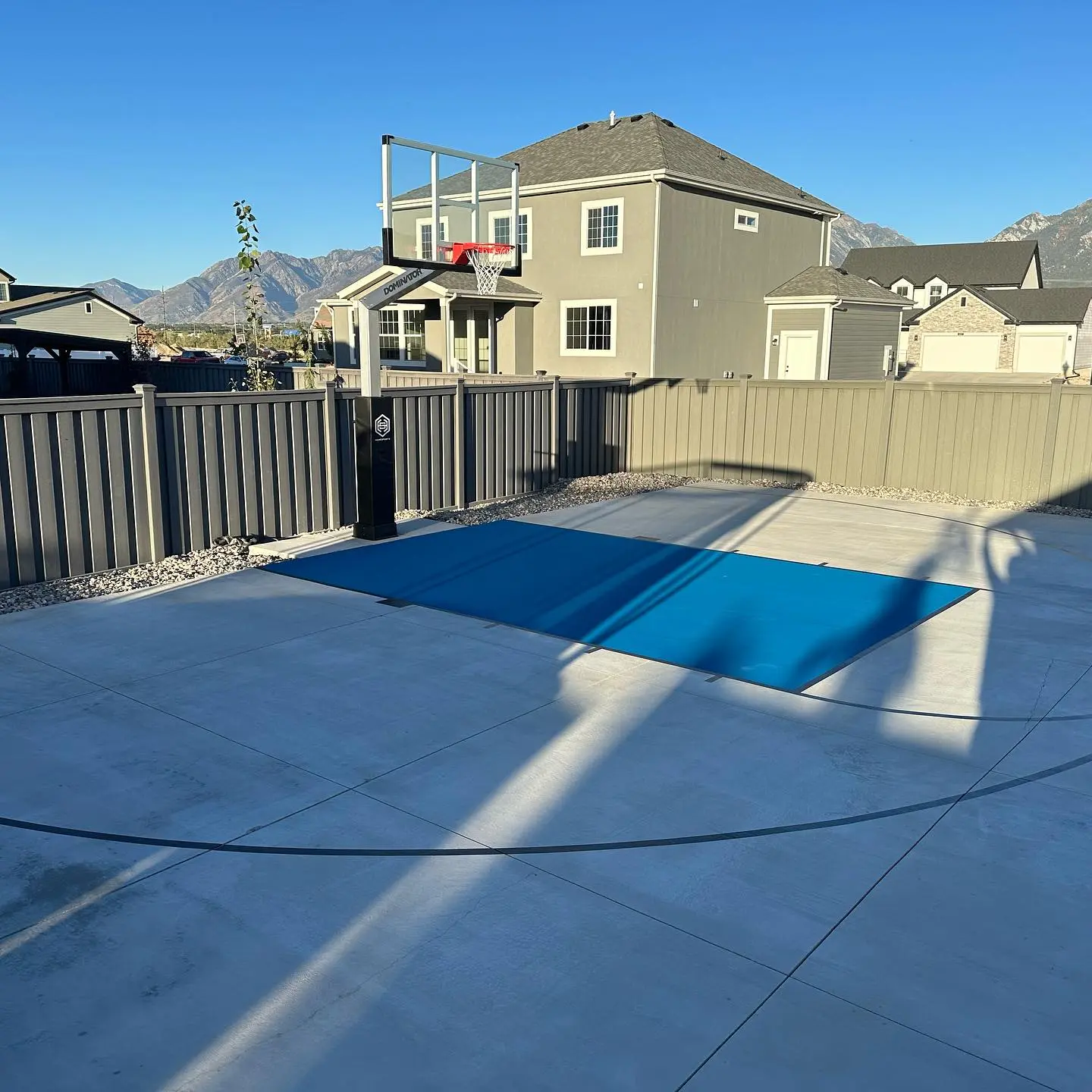
A standard half-court often gives homeowners the best balance between playability and cost. It provides enough room for real movement without taking over the entire backyard. Full courts are impressive, but they require much more planning, especially for grading, drainage, lighting, fencing, and property setbacks.
Accessories can also change the budget quickly. A high-quality in-ground hoop costs more than a portable system, but it offers better stability, safer play, and a more professional feel. Tempered glass backboards, breakaway rims, padding, and adjustable systems all add cost but can improve the experience.
Other add-ons may include:
Court lighting for evening play
Fencing or ball containment netting
Rebounders or practice equipment
Seating areas or walkways
Custom colors and logos
Multi-sport striping
Retaining walls or landscaping repairs
Labor should also be taken seriously. A basketball court requires multiple skill sets: excavation, grading, concrete or asphalt installation, drainage planning, surfacing, striping, and equipment installation. DIY may be realistic for small accessories or some modular tile installations, but the foundation and surface preparation are usually best handled by professionals.
How much does it cost to build a basketball court with professional installation?
Professional installation costs more than a basic DIY approach, but it helps protect the investment. Mistakes in grading, slab thickness, drainage, or surfacing can be expensive to correct after the court is built.
Before approving a quote, homeowners should ask clear questions:
What site preparation is included?
How will water drain off and away from the court?
What base thickness and reinforcement are recommended?
Are permits or setback requirements needed?
What surface system is being installed?
How are cracks, low spots, and edges handled?
What maintenance will the court need over time?
Is the quote itemized enough to compare fairly?
Permits and local requirements should not be overlooked. Depending on the property, city, HOA, court size, lighting, fencing, or drainage changes, approvals may be needed before construction begins. Skipping this step can create delays or costly corrections later.
A realistic basketball court budget should include three layers: the visible court, the hidden foundation, and the future maintenance. The visible court includes color, lines, hoop, and accessories. The hidden foundation includes excavation, base material, slab or asphalt, and drainage. Future maintenance includes cleaning, occasional crack repair, resurfacing, and keeping the surrounding area clear of debris.
A well-built court can become one of the most-used outdoor spaces on a property. It supports exercise, skill development, family time, and casual competition without needing to drive to a gym or public park. The best results come from planning the project as a long-term improvement rather than a quick backyard upgrade.
Ace Coatings Utah approaches basketball court projects with that long-term view: start with the site, build a reliable foundation, choose the right surface system, and finish with details that match how the court will actually be used.