



How Many Pickleball Courts Fit in a Tennis Court | Ace Coatings Utah
If you’re planning a court conversion or simply curious about facility design, understanding how many pickleball courts fit in a tennis court is essential. With pickleball rapidly growing across the U.S., schools, councils, and private facilities are increasingly looking to maximize existing tennis court space without compromising play quality or safety. This guide breaks down court dimensions, layout options, and real-world considerations to help you make informed decisions.
How Many Pickleball Courts Fit in a Tennis Court Based on Court Dimensions
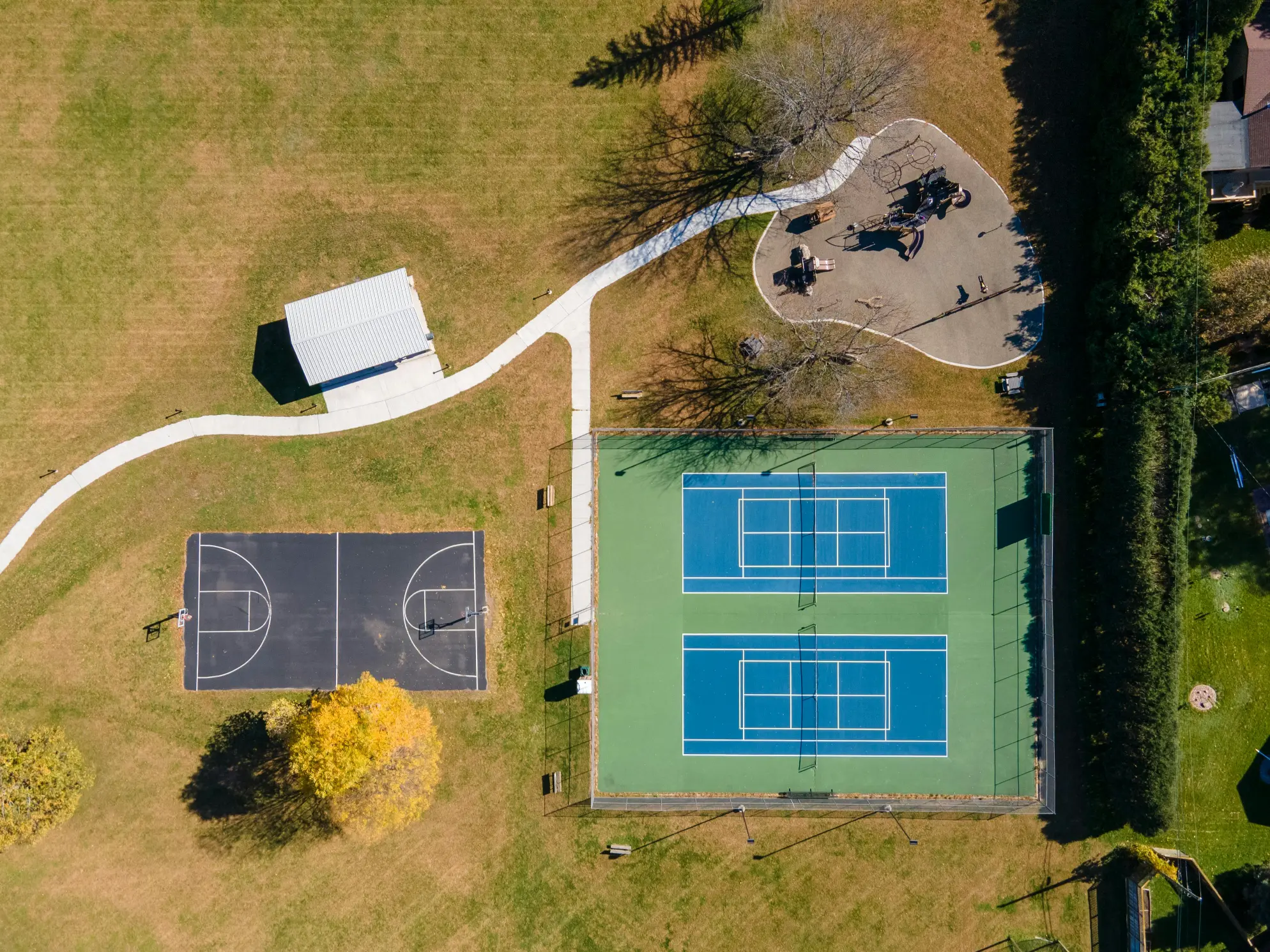
Before any conversion takes place, it’s important to understand how the official dimensions of each sport compare. Accurate measurements ensure compliance, safety, and proper gameplay.
Standard Pickleball Dimensions
A regulation pickleball court measures 20 feet wide by 44 feet long, including the non-volley zone (commonly called the kitchen). The kitchen extends 7 feet from the net on each side. Net height is 36 inches at the sidelines and 34 inches at the center.
These compact dimensions are one of the main reasons pickleball adapts so well to existing tennis courts. Contractors such as Ace Coatings often highlight that pickleball’s smaller footprint allows facilities to significantly increase player capacity without expanding land use.
Using Tennis Court Measurements
A standard tennis court measures 60 feet wide by 120 feet long, which includes doubles sidelines, baselines, and run-off areas. The tennis net stands higher at 42 inches on the posts and 36 inches at the centre.
Because a tennis court is nearly three times larger than a pickleball court, it provides ample space for multiple pickleball layouts when planned correctly.

How Many Pickleball Courts Fit in a Tennis Court Using Common Layout Options
Once dimensions are understood, the next step is choosing a layout that matches your usage goals. Different configurations work better for recreational play, organized leagues, or tournament settings.
With a Single-Court Layout
A single pickleball court can be placed centrally within a tennis court. This option is commonly used by multi-sport facilities that want to preserve tennis functionality while offering pickleball access.
This layout requires minimal changes and is often recommended by surface specialists like Ace Coatings when flexibility is a top priority.
With Two-Court Layouts
Two pickleball courts can fit across the width of a tennis court by rotating them sideways. This configuration is popular at community centres and schools because it allows multiple games while still maintaining clear sightlines and safety spacing.
When striping courts in this format, Ace Coatings typically advises using high-contrast line colours to prevent confusion between tennis and pickleball boundaries.
With Four-Court Configurations
The most space-efficient option allows four pickleball courts to fit within a single tennis court. Courts are arranged in a grid pattern, maximizing both width and length.
This setup is ideal for leagues and tournaments and is recognized by USA Pickleball as a standard multi-court conversion approach when proper spacing and net systems are used.
How Many Pickleball Courts Fit in a Tennis Court When Practical Factors Are Considered
Beyond measurements and layouts, real-world factors play a major role in whether a conversion is successful and sustainable.
Based on Surface Conditions
Surface quality directly affects playability and safety. Asphalt and concrete are commonly used for both tennis and pickleball, but cracks, pooling, or slick coatings can create hazards.
Professional resurfacing providers such as Ace Coatings often recommend surface repairs or acrylic coating systems before restriping to ensure consistent ball bounce and long-term durability.
When Net Systems Are Adjusted
Pickleball requires a lower net than tennis, so adjustable or portable net systems are necessary. Many facilities use temporary nets to avoid altering existing tennis infrastructure.
According to guidance frequently referenced by Ace Coatings, portable net systems offer flexibility while maintaining regulation heights for organized play.
How Many Pickleball Courts Fit in a Tennis Court Without Affecting Community Use
Noise, lighting, and player traffic are often overlooked during planning. Pickleball produces sharper sounds than tennis, which can affect nearby residents.
Facilities that work with experienced contractors like Ace Coatings often incorporate sound-dampening surfaces, designated play hours, and improved lighting layouts to minimize disruption while maximizing usability.
Benefits of Converting Tennis Courts to Pickleball Courts
Converting tennis courts offers several long-term advantages:
Higher participation rates due to pickleball’s accessibility
Cost savings compared to building new courts
Increased community engagement through social and league play
Better utilisation of underused tennis facilities
Many organisations find that strategic conversions supported by specialists such as Ace Coatings result in higher overall facility usage without sacrificing tennis access.
Conclusion
Understanding court dimensions, layout options, and practical considerations makes it clear that a single tennis court can support anywhere from one to four pickleball courts, depending on your goals. The key to a successful conversion lies in thoughtful planning, quality surface preparation, and clear court markings.
Whether you’re managing a recreational facility or expanding a sports complex, working with experienced professionals and following recognized standards ensures your courts remain safe, functional, and enjoyable for years to come. Contact Ace Coatings today for more information.