




How Big Is a Pickleball Court? Official Dimensions & Layout
Imagine standing in a standard double-car driveway. Believe it or not, you're already picturing close to half the space needed for a regulation game. That’s often the first surprise for people wondering How Big Is a Pickleball Court. Unlike sports that demand huge fields or large athletic complexes, pickleball fits comfortably into spaces many homes, parks, and recreation centers already have.
This compact footprint is one of the biggest reasons the sport has exploded in popularity. Because the playing area is smaller than a tennis court, players spend more time rallying and less time chasing the ball. The result? Faster games, more social interaction, and a sport that players of nearly any age can enjoy.
The official playing area measures 20 feet wide by 44 feet long, but building a court involves more than painting lines on pavement. Players need extra room to move safely, slow down after sprints, and chase deep shots without obstacles. Understanding the difference between the actual court lines and the recommended playing footprint is essential when planning a backyard court, community facility, or sports complex.
If you’re considering building or resurfacing a court, professional installers like Ace Coatings Utah often recommend planning the full space carefully before any paint or coating is applied. Proper planning ensures the court performs well, lasts longer, and meets regulation standards.
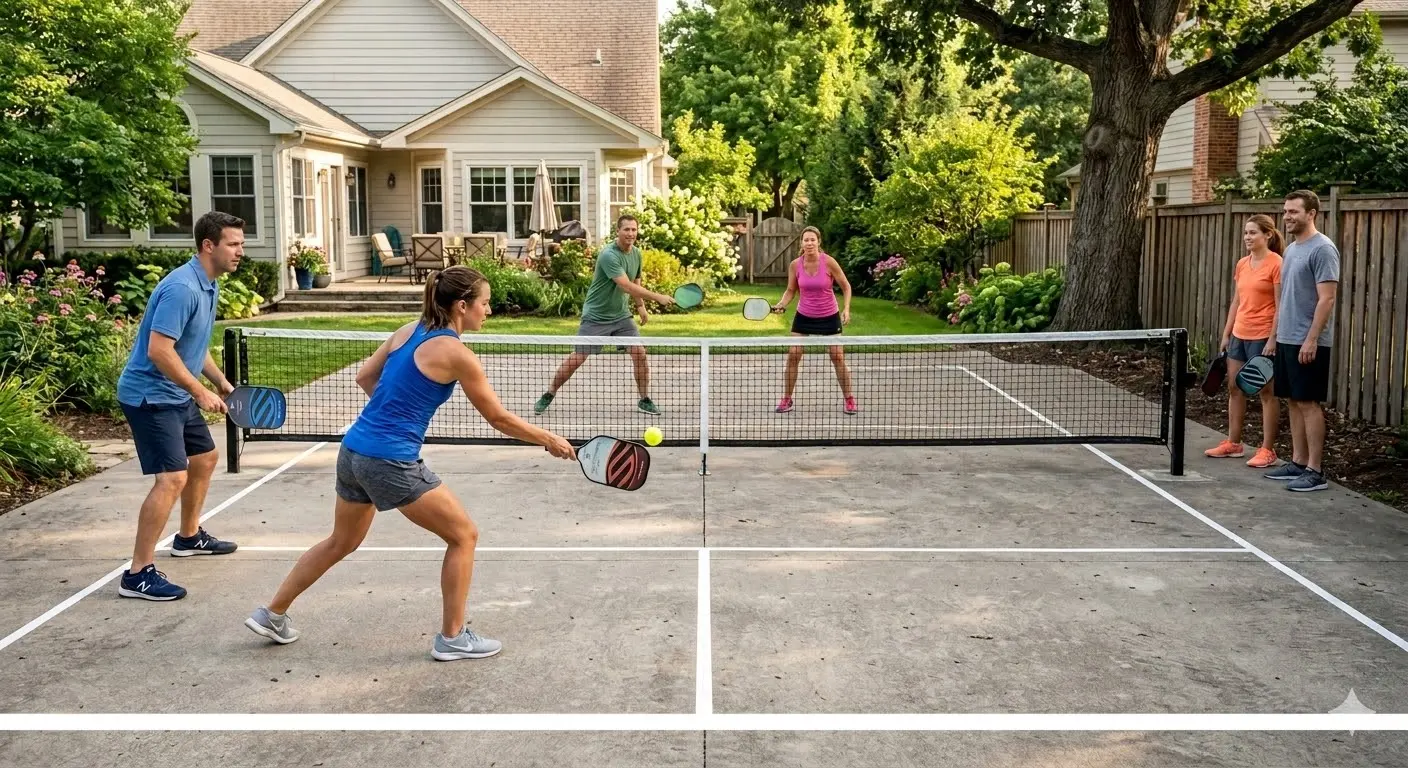
Official Pickleball Court Dimensions Explained
A regulation pickleball court follows a straightforward layout designed to keep the game accessible while still allowing strategic play.
The official playing rectangle measures:
20 feet wide
44 feet long
880 square feet of playing surface
These dimensions stay the same whether you're playing singles or doubles, which is different from tennis where doubles courts expand using side alleys.
Court Line Breakdown
Here’s how the lines divide the court:
Baselines: The back boundary lines where serves originate
Sidelines: The outer edges of the court running the full 44-foot length
Service Areas: The rectangular sections behind the kitchen used during serves
Because the court is relatively small, players rely more on quick reflexes and strategic placement than raw endurance. This is one reason the sport appeals to beginners, seniors, and competitive athletes alike.
When contractors like Ace Coatings Utah build or restore pickleball courts, they carefully measure these dimensions to maintain regulation accuracy and ensure the playing experience matches tournament standards.
How Big Is a Pickleball Court With Safety Space?
While the painted lines measure 20 by 44 feet, the recommended playing footprint is significantly larger. That’s because players frequently run beyond the lines when returning deep shots or wide angles.
For safe gameplay, the commonly recommended footprint is:
30 feet wide
60 feet long
This provides a buffer zone surrounding the playing area.
Recommended Clearance Around the Court
To keep players safe and comfortable, most facility planners recommend:
10 feet behind each baseline for serves and deep returns
5–8 feet along each sideline for wide angles and player movement
This extra space allows players to run, stop, and recover safely without tripping over grass, fences, or landscaping.
These guidelines align with recommendations from USA Pickleball, the sport’s national governing organization. Following them helps ensure your court feels comfortable and playable, whether it’s installed in a public park or a private backyard.
For homeowners installing a backyard court, working with specialists such as Ace Coatings Utah can make a big difference. Professional installers understand surface preparation, coating durability, and proper spacing to ensure the court performs well for years.
Pickleball Court Kitchen Measurements and Layout
One of the most unique features of pickleball courts is the Non-Volley Zone, more commonly called the Kitchen.
This area plays a critical role in the sport’s strategy and sets pickleball apart from tennis or badminton.
What Is the Kitchen?
The kitchen is a 7-foot zone on both sides of the net, creating a 14-foot section in the center of the court where players cannot volley the ball.
In other words:
Players cannot hit the ball in the air while standing in the kitchen
The rule prevents players from standing at the net and smashing every shot
Instead, the game emphasizes soft shots, placement, and patience.
Why the Kitchen Matters
Because the pickleball net height is relatively low (34 inches at the center), allowing volleys directly at the net would make rallies extremely short.
The kitchen forces players to:
Use controlled shots called dinks
Engage in longer rallies
Develop strategic positioning
This rule is a huge part of what makes pickleball so engaging. Players must balance aggression with finesse, which creates exciting rallies even on a compact court.
Why Pickleball Courts Fit Almost Anywhere
Another reason for pickleball’s rapid growth is how efficiently courts use space.
A standard tennis court can fit up to four pickleball courts within its boundaries. This conversion allows parks, gyms, and community centers to dramatically increase player capacity without expanding their facilities.
For homeowners, this also means installing a court may be easier than expected. Many driveways, patios, or unused backyard areas are large enough for a 30 x 60 foot footprint.
Backyard Installation Tips
Before building your own court, check these essentials:
Surface condition
Concrete or asphalt should be smooth and level.
Clear space
Make sure you have a full 30 x 60 foot area free of obstacles.
Vertical clearance
If installing indoors, ceilings should ideally be 18–20 feet high to allow for lobs.
Neighbor considerations
Pickleball can be noisy, so plan court orientation carefully.
Professional resurfacing companies such as Ace Coatings Utah often help homeowners convert driveways or existing sport courts into pickleball surfaces using specialized coatings that improve traction, durability, and playability.
Final Thoughts
Pickleball’s biggest advantage might be its simplicity. With a 20 by 44-foot playing area and a 30 by 60-foot recommended footprint, the court is compact enough to fit in many backyards, driveways, and recreational spaces.
Understanding the court layout — from the baselines to the kitchen — ensures the game plays the way it was designed: strategic, social, and incredibly fun.
Whether you're planning a backyard setup, resurfacing an existing court, or installing multiple courts for a community facility, careful planning and proper measurements make all the difference.
Professionally installed surfaces also improve durability, traction, and long-term performance — which is why many homeowners and facilities work with specialists like Ace Coatings Utah when building or upgrading courts.
Contact us at Ace Coatings Utah today to discuss pickleball court installation, resurfacing, or coating services and turn your space into a professional-quality playing surface.