Backyard Basketball Court in Utah: A Homeowner's Guide to Size, Surface and Cost
Yes, you can add a court to your own yard in Utah, and most projects take only a few days. Families looking for backyard basketball court in Utah options usually settle three things first: the size, the playing surface and where the hoop goes. Ace Coatings Utah helps homeowners turn plain concrete into a safe, good-looking court that handles Utah's strong sun, heavy snow and freeze-thaw cycles.

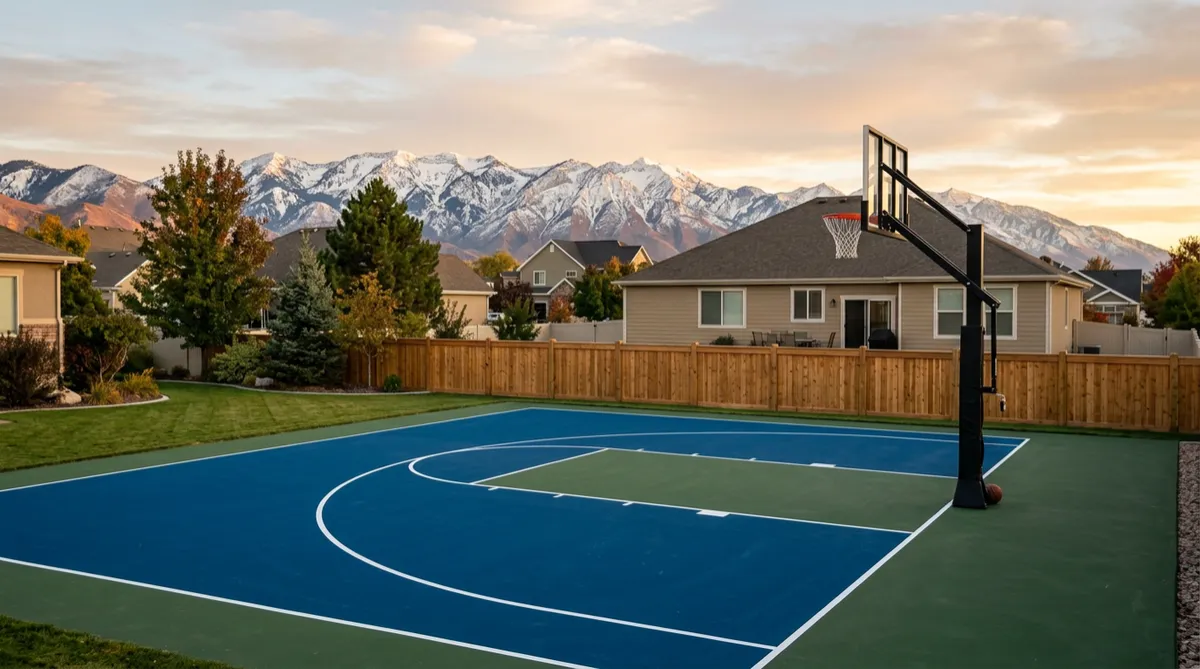
A coated home court with a mountain backdrop.
How big should a home basketball court be?
The right size depends on your yard and how you play. Here are the most common options:
| Court type | Typical size | Best for |
|---|---|---|
| Shooting pad | About 15 x 20 ft | Free throws and casual shooting |
| Half court | About 30 x 30 ft | One-on-one games and family play |
| Large home court | 40 x 50 ft and up | Teen players and group games |
| Full regulation court | 94 x 50 ft | Rare for homes, needs a lot of land |
For most families, a half court is the best balance of fun and footprint. It gives you room to dribble, shoot and defend without taking over the whole yard. Leave extra space around the lines so players have a safe runoff area.
What is the best surface for a backyard court?
Concrete is the most common base because it is strong, stable and long-lasting. On its own, though, bare concrete can be rough on shoes, knees and basketballs. A sport coating fixes this.
A quality coating system can give you:
- A smoother, more comfortable playing feel than raw concrete
- A non-slip texture for better footing, even after a rain shower
- UV resistance to help colors stay bright under Utah's sun
- Custom colors and lines so the court looks the way you want
- Easier cleaning, with no need for heavy upkeep
The slab matters as much as the coating. A level, well-prepared base with proper drainage keeps water from pooling and helps the surface last through many winters.

A family court is a place for daily play.
Why does Utah weather matter for your court?
Utah is a hard place for outdoor surfaces. Your court may face:
- Intense summer sun at elevation, which can fade and wear down weak finishes
- Freeze-thaw cycles, where water gets into small cracks, freezes and expands
- Snow and ice melt, which can stress the surface over time
- Big temperature swings between day and night
Because of this, a court built for a mild climate may not hold up here. Choose a base and coating designed for outdoor use in changing weather, and fix small cracks early before they grow.
Where should the hoop go?
Hoop placement affects both safety and how much you enjoy the court. Keep these tips in mind:
- Face the hoop away from the afternoon sun if you can, so players are not shooting into glare.
- Keep windows, cars and fragile landscaping out of the line of fire. Stray balls add up.
- Allow clear space behind the baseline so players can move without hitting a fence or wall.
- Choose the right hoop type. In-ground systems are sturdy for serious play. Portable systems give you flexibility.
- Set the standard rim height at 10 feet for teens and adults, and use an adjustable system for younger kids.
Can your court do more than basketball?
Yes, and this is one of the best ways to get more value from your space. Many homeowners add pickleball lines to the same surface, so one slab serves the whole family. A standard pickleball playing area is 20 x 44 feet, and a USA Pickleball construction guide is a helpful place to check recommended court layouts and dimensions before you plan.
Other popular add-ons include:
- Multi-sport line markings for pickleball, four square or hopscotch
- A matching color border around the playing area
- Lighting for evening games
- Nearby seating or a small shade structure

A non-slip coated surface up close.
What affects the cost of a backyard court?
No two yards are alike, so prices vary. These factors usually have the biggest effect:
- Size of the court: more square footage means more material and labor
- Condition of your concrete: a new slab costs more up front, while an existing one may only need repair and prep
- Coating system and finish: texture, color choices and layers can change the price
- Line markings and extras: multi-sport lines, borders and logos add detail
- Site access and grading: slopes, tight gates and drainage work can affect labor
- Hoop system: in-ground and adjustable systems cost more than basic portable ones
The best way to get an accurate number is a quote based on your specific yard.
What should you check before you build?
A little planning up front prevents headaches later:
- HOA rules: many neighborhoods have guidelines on structures, lighting and fencing.
- City or county requirements: ask about setbacks, permits and noise rules.
- Property lines and utilities: know where lines run before any digging or pouring.
- Drainage: make sure water flows away from the court and your home.
- Neighbors: a friendly heads-up goes a long way, especially if you plan evening games.
How do you take care of a coated court?
Routine care is simple. Sweep off leaves and debris often, rinse the surface with a hose, and clean spills right away. Avoid sharp metal tools when you shovel snow, and use a plastic shovel instead. Check for new cracks each spring and fall, since small repairs are much easier than big ones. With regular care, your court can stay a place the whole neighborhood wants to play.
Frequently asked questions
How long does it take to build a backyard basketball court?
Many residential projects take a few days to a couple of weeks. Timing depends on court size, weather, whether you need a new slab and how long the concrete needs to cure before it is coated.
Can I put a basketball court over my existing concrete?
Often, yes. If your slab is solid, level and well drained, it can be a strong base. Cracks, dips and drainage problems should be fixed first so the coating performs well and lasts.
Is a backyard court a good investment?
A court adds daily use and long-term enjoyment for your family. Many homeowners also find that an outdoor space for sports and play makes the property more appealing. The value you get depends on your neighborhood and how well the court is built and kept.
Can kids and adults both use the same court?
Yes. An adjustable-height hoop lets younger kids and adults share one court. Add pickleball lines and the court becomes a multi-sport space for every age.
What is the best time of year to build in Utah?
Late spring through early fall is usually the easiest window, since warm and dry conditions help concrete cure and coatings go on properly. Booking early lets you plan around Utah's busy building season.
Ready to plan your court?
A backyard court gives your family a place to move, compete and make memories without leaving home. The best results come from smart planning, a strong base and a surface made to handle Utah conditions. If you want to talk through your yard, your goals and your budget, reach out to Ace Coatings Utah and start the conversation today. Want to see the quality first? Browse our finished court projects and read what homeowners say in our reviews.