 ACE COATINGSUTAH
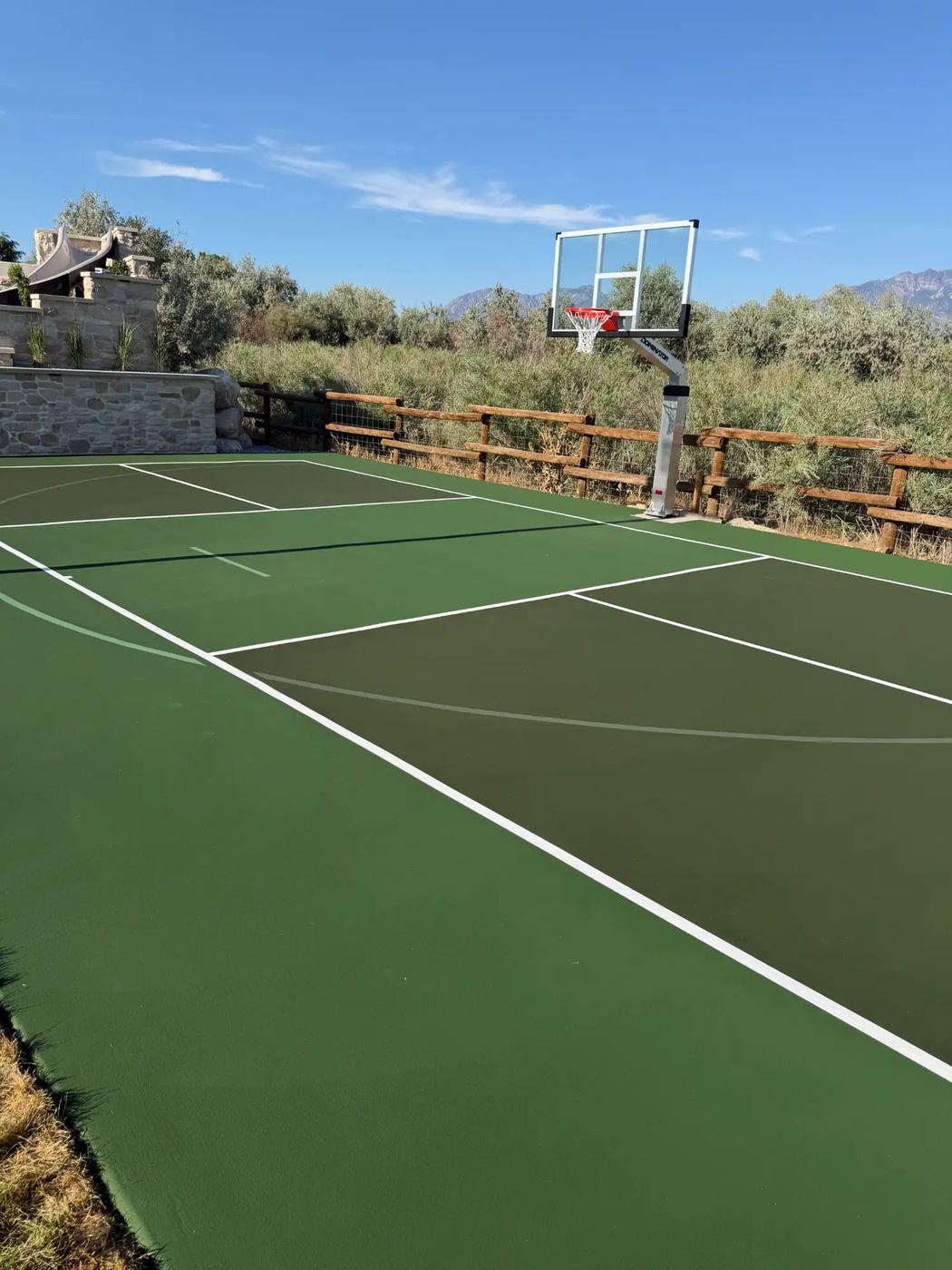
If you're looking for post tension concrete basketball courts in Utah, the short answer is yes: a post-tension slab is one of the most durable foundations for a home court in our climate. Steel cables inside the concrete are tightened after it cures. This compresses the slab and greatly reduces cracking from freeze-thaw cycles and shifting soil. You get a flatter, smoother surface that lasts longer. The upfront cost is usually higher than a standard slab, but you spend less on repairs later. Here's what to know before you build.
What Is a Post-Tension Concrete Court?
A post-tension slab is poured with steel strands, called tendons, running through it. These sit inside protective sleeves. After the concrete has gained enough strength, crews tighten the tendons with hydraulic jacks. That pulls the whole slab into compression.
Concrete is strong when squeezed but weak when stretched. Cracks form when the slab is pulled apart by temperature swings, moisture or soil movement. Keeping the slab under constant compression helps it resist those forces.
For a basketball court, that means fewer cracks, fewer low spots and a more even bounce.
How Is It Different From a Standard Concrete Slab?
A standard slab relies on steel rebar or wire mesh and a thick pour. Rebar holds cracks together after they form. Post-tensioning works to keep them from forming in the first place.
| Feature | Standard Reinforced Slab | Post-Tension Slab |
|---|---|---|
| Crack resistance | Moderate | High |
| Slab thickness | Often thicker | Often thinner for the same strength |
| Joints | More control joints | Fewer joints needed |
| Surface smoothness | Good | Excellent |
| Upfront cost | Lower | Higher |
| Long-term repairs | More likely | Less likely |
Fewer joints matter on a court. Every joint is a spot where a ball can bounce unpredictably or where moisture can get in.
Why Utah's Climate Makes This a Smart Choice
Utah is hard on concrete. Along the Wasatch Front and in Utah County, winter nights drop below freezing, and spring days warm up fast. Water seeps into tiny pores in the concrete, freezes, expands and widens the cracks. This freeze-thaw cycle is a leading cause of damaged outdoor slabs.
Many Utah neighborhoods also sit on expansive clay soils. These soils swell when wet and shrink when dry, so the ground under your court can move over time.
Post-tensioning helps a slab handle that stress. It won't make concrete invincible, but it gives your court a much better chance of staying flat and crack-free through the seasons.
What Does the Building Process Look Like?
Knowing the steps helps you ask better questions when you talk to a contractor.
- Site evaluation. The crew checks slope, drainage, soil type and available space. A full-size court needs more room than most people expect, but half-courts and custom sizes work well in many yards.
- Excavation and base preparation. A properly compacted gravel base keeps the slab stable and drains water away.
- Forming and tendon layout. Forms set the court's shape. Tendons are laid in a precise grid, supported at the right height inside the slab.
- Concrete pour and finish. The concrete is placed and finished to a smooth, even surface.
- Curing and stressing. Once the concrete reaches the required strength, the tendons are tightened to compress the slab.
- Surface coating and court lines. A protective court coating adds color, traction and UV protection, and the lines are painted on.
Each step affects how long the court lasts, so choose a team with real experience in concrete and court surfacing.
Do You Need a Special Surface Coating?
Bare concrete works, but a coating makes a big difference. Coatings help with:
- Traction and comfort. A textured surface gives better grip and is a little gentler on joints than raw concrete.
- Weather protection. Quality coatings guard against sun and moisture.
- Appearance. You can choose colors for the playing area and the out-of-bounds border.
- Easier cleaning. A sealed surface sheds dirt and debris more easily.
If you're deciding on a coating, ask how it will perform in Utah's strong UV exposure and cold winters.
Can One Court Handle Basketball and Pickleball?
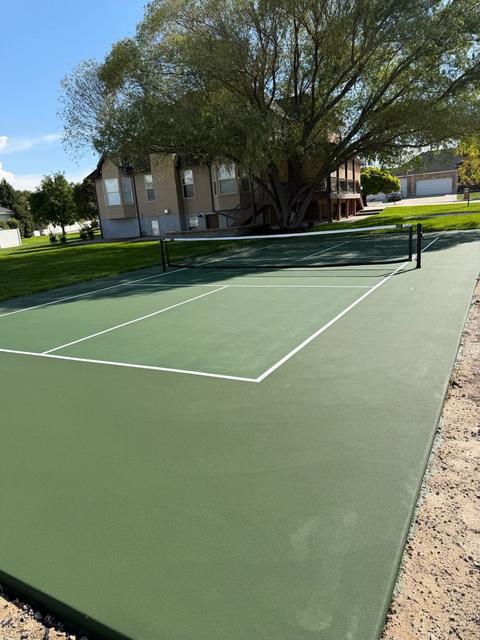
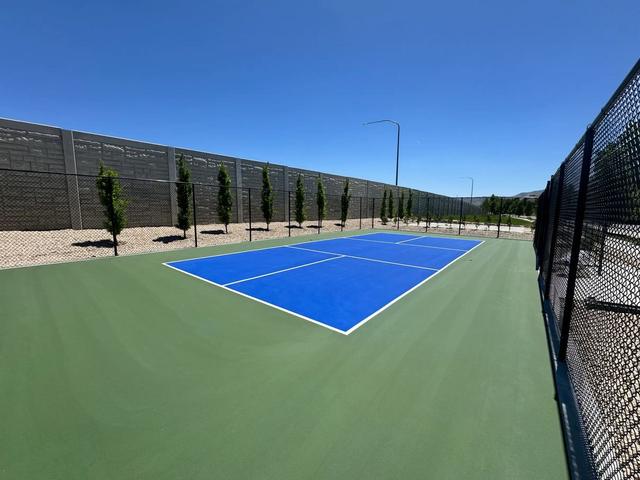
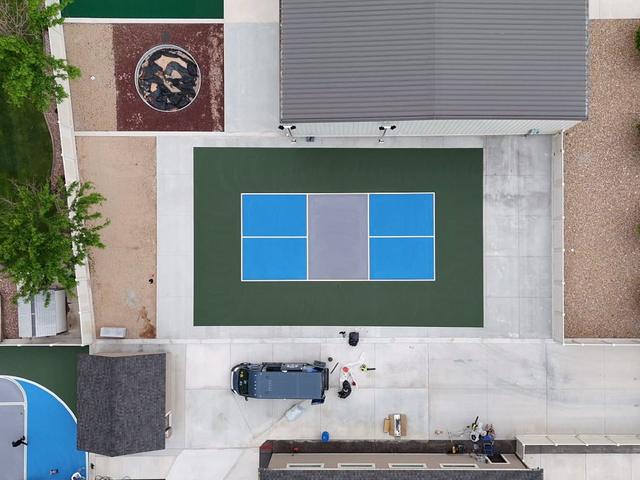
Yes, and many families do exactly that. Pickleball is one of the fastest-growing sports in the country, and a smooth, flat concrete court suits it well. Dual-use courts typically add pickleball lines and a portable net on the same surface.
If you plan to add pickleball, check the official construction guidance from USA Pickleball. It covers court dimensions, surfaces and layout, so your court is built to proper specs from the start.
What Affects the Cost of a Post-Tension Court?
No two yards are the same, so costs vary. The main factors are:
- Court size. Full court, half court or custom.
- Site conditions. Slope, access and the need for grading or retaining walls.
- Soil and drainage. Poor soil may need extra preparation.
- Coating choice. Colors and finish level change the price.
- Extras. Hoops, lighting, fencing and pickleball lines.
A post-tension slab costs more than a basic slab up front. Think of it as paying once for a surface designed to resist cracking, instead of paying again later for patching, resurfacing or replacement. For the exact price on your property, a site visit is the only reliable way to get an accurate estimate.
Is a Post-Tension Court Right for Your Home?
It's likely a great fit if you:
- Want a court that stays smooth for many years
- Live somewhere with hard winters or clay soil
- Plan to use the court often, especially with kids or teens
- Want to add value and curb appeal to your property
- Would rather invest once than keep repairing
If you only want a small, casual pad and don't mind some cracking over time, a standard slab may meet your needs. A good contractor will tell you honestly which option makes sense for your yard and budget.
Tips for Choosing the Right Contractor
Whoever you hire, ask these questions:
- Do you have experience with post-tension slabs, not just standard concrete?
- Can you show me completed courts and give me local references?
- How do you handle drainage and soil conditions?
- What coating system do you use, and how does it handle Utah weather?
- What warranty do you offer on the work?
- Will you give me a clear, written estimate?
Clear answers to these questions are a good sign. Vague ones are a warning.
How to Care for Your Court
A well-built court needs little upkeep, but a few habits go a long way:
- Sweep or blow off leaves and debris regularly.
- Rinse with water and mild cleaner when it gets dirty.
- Keep sprinklers from spraying the court constantly.
- Don't drill, cut or core into the slab. Tendons are under tension and can be dangerous if damaged.
- Check the coating each year and touch it up as needed.
The last point matters. Never cut or drill into a post-tension slab without first locating the tendons. If you want to add a pole, light or fence, have a professional plan it.
Frequently Asked Questions
What is a post-tension concrete basketball court?
It's a concrete court with steel cables inside the slab that are tightened after curing. This compresses the concrete and reduces cracking.
Are post-tension courts better than regular concrete courts?
For most homeowners in climates like Utah's, yes. They resist cracking better, need fewer joints and stay smoother for longer. They do cost more upfront.
How long does a post-tension court last?
Lifespan depends on soil prep, construction quality and maintenance. A well-built slab with a quality coating can last for many years with basic care.
Will a post-tension court still crack?
Cracks can still happen, but they are far less likely than in a standard slab. Good base preparation and drainage help reduce the risk further.
Can I use my court for pickleball too?
Yes. Add pickleball lines and a portable net to the same surface. Check USA Pickleball's construction guidance for correct dimensions.
How long does it take to build?
It depends on size, weather and site prep. Concrete also needs time to cure before the tendons are tightened and the coating goes on, so expect it to take longer than just the pour day.
Can I install a hoop on a post-tension slab?
Yes, but plan the hoop location before the pour. Footings and poles should be placed where they won't interfere with the tendons.
Ready to Build Your Backyard Court?
A post-tension court is an investment in your family's fun, your property's value and years of trouble-free play. The key is choosing a team that understands Utah's soil, weather and what a quality court should feel like underfoot.
At Ace Coatings Utah, we help homeowners plan courts and surfaces built for local conditions. Want to see the quality first? Browse our finished court projects and read what homeowners say in our reviews.